Leave Your Message

Top 10 MVNO Core Network Solutions Transforming Mobile Service Providers?

The mobile industry is witnessing a significant transformation, driven by innovations in MVNO core network solutions. As mobile service providers adapt to changing consumer demands, these solutions play a critical role. They enhance network efficiency, improve customer experiences, and enable greater flexibility.

MVNO core networks are designed to support various commercial models. Providers can offer tailored services based on specific needs. However, not all solutions are created equal. Many struggle with integration challenges and scalability issues. This creates opportunities for growth but also highlights areas requiring careful consideration.

AI technologies are emerging as valuable tools for mobile networks. They streamline operations, improve service delivery, and can even assist in decision-making. Yet reliance on AI also raises questions about cybersecurity and data management. The balance between innovation and security is crucial for future success in the MVNO landscape.

Top 10 MVNO Core Network Solutions Transforming Mobile Service Providers?

Overview of MVNO and the Importance of Core Network Solutions

Top 10 MVNO Core Network Solutions Transforming Mobile Service Providers?

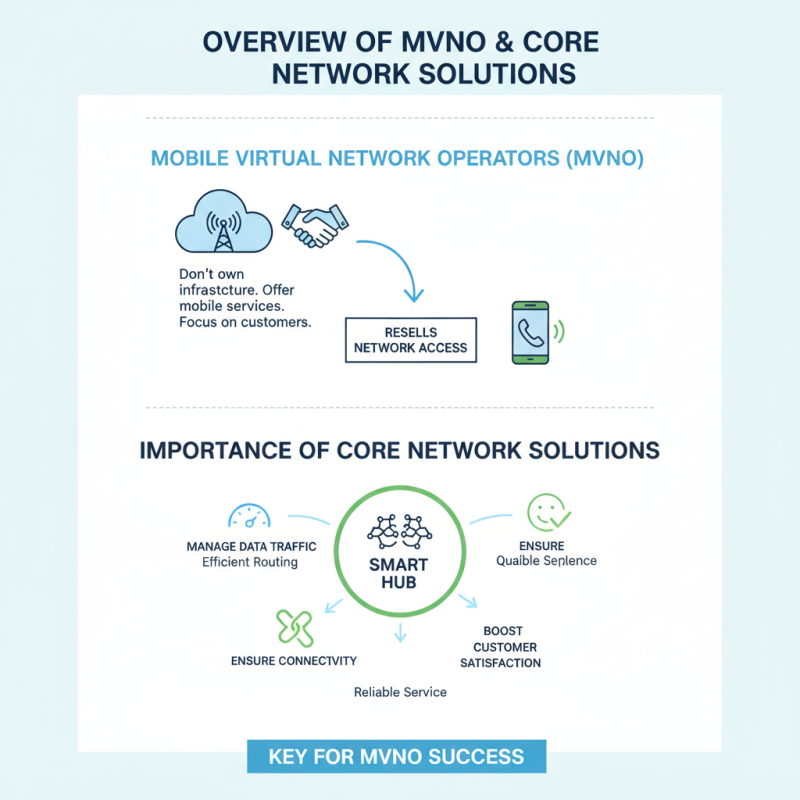
Mobile Virtual Network Operators (MVNOs) are changing how we think about mobile services. They don’t own the infrastructure, but they provide essential services. Core network solutions play a critical role here. These solutions help MVNOs manage data traffic efficiently. They ensure connectivity and reliability, which are vital for customer satisfaction.

The importance of core network solutions cannot be overstated. They enable scalability and flexibility. MVNOs can expand their services without heavy investments in physical infrastructure. But it’s not all smooth sailing. Integration with existing systems can be challenging. Network reliability may fluctuate, causing service interruptions. This inconsistency can lead to customer dissatisfaction.

Moreover, keeping up with technology is daunting for many. The transition to cloud-based solutions can be overwhelming. MVNOs must constantly reassess their strategies to stay competitive. Not all solutions are one-size-fits-all. They must find a balance between cost and quality. Adopting the right core network solution can ultimately define an MVNO's success.


Key Features of Effective MVNO Core Network Solutions

The mobile virtual network operator (MVNO) landscape is rapidly evolving. Effective core network solutions are essential for MVNOs aiming to thrive. These solutions must be flexible and scalable to adapt to changing user demands. Many MVNOs seek seamless integration with existing infrastructure. This reduces costs and accelerates deployment.

Key features include self-service capabilities. They empower users to manage their services easily. Also, advanced analytics can help operators understand user behavior. This drives better service customization. Moreover, automation is crucial. It not only improves efficiency but also reduces human error. However, not all MVNOs leverage these advancements effectively. Some still rely on outdated processes that hinder growth.

Security should not be overlooked. As MVNOs handle sensitive data, robust security measures are vital. Yet, many providers underestimate this risk. Regular updates and monitoring can enhance protection. Ultimately, while technology can drive progress, implementation must be thoughtfully executed. Examining existing strategies can reveal opportunities for improvement.

Top 10 MVNO Core Network Solutions Transforming Mobile Service Providers

Solution Key Features Benefits Use Cases
Cloud-Based Billing Automated billing, real-time updates, flexible invoicing Cost efficiency, scalability, reduced time to market Postpaid and prepaid customer management
Dynamic Fraud Prevention Real-time monitoring, machine learning algorithms Enhanced security, risk mitigation, cost savings Combating SIM card fraud and financial loss
Self-Service Portal Account management, service customization, support tickets Improved user experience, reduced operational costs Customer account accessibility and management
Network Function Virtualization (NFV) Virtualized network components, flexible architecture Scalability, reduced hardware costs, agility Adaptable network infrastructure for services
Data Analytics Platform Customer insights, usage patterns, revenue forecasting Informed decision-making, targeted marketing Optimizing offerings based on user behavior
Integrated CRM Solutions Customer relationship management, sales automation Enhanced customer engagement, streamlined processes Managing customer relationships effectively
IoT Connectivity Solutions Device management, data transmission protocols Support for IoT devices, new revenue streams Connecting smart devices and applications
Multi-Channel Communication Services Voice, SMS, MMS, IP messaging Comprehensive communication options, user retention Enhancing customer communication experience
Seamless Roaming Solutions Roaming agreements, automated provisioning Enhanced customer convenience, competitive edge Facilitating international service offerings
API-Driven Integration Open APIs, third-party service integration Flexibility, innovation, collaboration opportunities Customizing services with third-party applications

Top Technologies Revolutionizing MVNO Core Networks

Top 10 MVNO Core Network Solutions Transforming Mobile Service Providers?

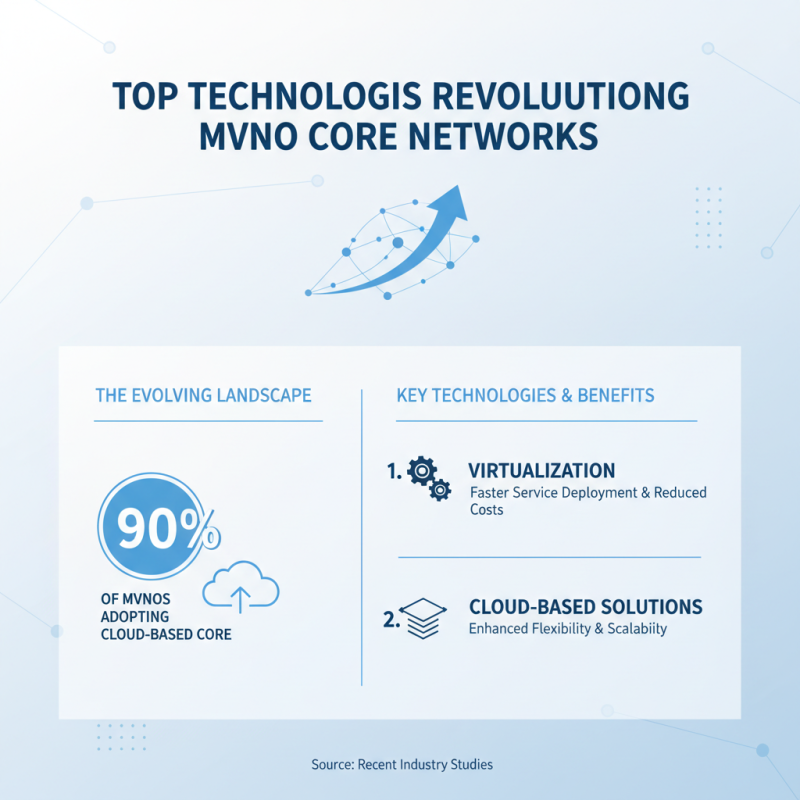
The mobile virtual network operator (MVNO) landscape is evolving rapidly. Recent studies indicate that 90% of MVNOs are adopting cloud-based core network solutions. These technologies enhance operational flexibility and scalability. For instance, virtualization allows MVNOs to deploy services faster and reduce costs significantly.

One notable trend is the increasing use of Artificial Intelligence in network management. Reports show that AI can increase efficiency by up to 30%. Automated systems optimize routing and manage customer data in real-time. This evolution empowers MVNOs to cater to niche markets effectively. However, challenges remain. Many operators struggle with integrating these technologies into their existing infrastructure.

Another transformative technology is 5G network slicing. This allows MVNOs to offer tailored services for specific customer segments. Studies reveal that 5G adoption will grow by 65% over the next three years. But, there are concerns about the investment required. Risky decisions regarding infrastructure can lead to financial strain. As these technologies reshape the industry, MVNOs must navigate their implementation wisely.

Case Studies: Successful MVNO Implementations of Core Solutions

The rise of Mobile Virtual Network Operators (MVNOs) has transformed the mobile service landscape. Implementing core network solutions has allowed numerous MVNOs to thrive. For example, one MVNO focused on agility by adopting cloud-based infrastructure. This shift reduced operational costs significantly. Their agile structure enables quick responses to market fluctuations. Such flexibility often proves essential in competitive environments.


Another case highlights an MVNO that specialized in niche markets. By tailoring core solutions to specific customer needs, they managed to find a loyal customer base. The strategy helped them stand out against larger competitors. However, it also highlighted the risks of over-specialization. If market trends shift, the focus could become a liability. Additionally, some MVNOs struggled with integration challenges. Their decision to implement new core solutions was ambitious but not seamless.


These cases illustrate both successes and pitfalls in MVNO operations. As the industry continues to evolve, the adaptability of core network solutions remains paramount. Learning from others’ challenges can guide future implementations. In this dynamic market, understanding the balance between innovation and practicality is crucial for sustained success.

Future Trends in MVNO Core Network Innovations

The mobile virtual network operator (MVNO) landscape is rapidly changing. Key innovations in core network solutions are driving these changes. One major trend is the shift towards cloud-based infrastructures. This allows MVNOs to scale operations efficiently while reducing costs. Virtualization enables more flexible service offerings, meeting diverse customer needs.

Another area of focus is enhanced data analytics. MVNOs are increasingly utilizing big data to personalize customer experiences. By analyzing user behavior, providers can tailor plans and improve engagement. However, managing these data streams presents challenges. Data privacy concerns must be addressed carefully. Without proper safeguards, trust may erode.

Automation is also emerging as a game-changer. Network functions can be automated, reducing manual intervention. This can streamline operations and improve service quality. Yet, there's a risk of over-reliance on automation. Human oversight remains crucial in ensuring network reliability and customer satisfaction. Balancing automation with human insight is essential for future success.

Top 10 MVNO Core Network Innovations

This chart illustrates the percentage of adoption of various core network solutions among MVNOs. The data highlights the growing importance of advanced technologies in transforming mobile service providers.