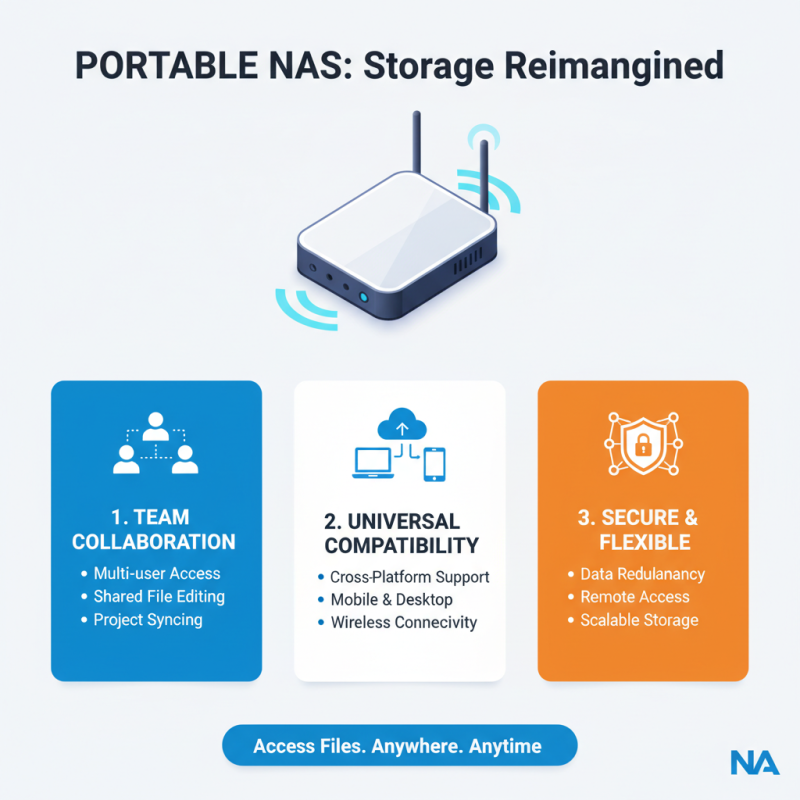
What is Portable Nas Storage and How Does It Work?
Portable NAS storage has become increasingly vital in today's digital world. As remote work grows, data access must keep pace. According to a report by Statista, the global network-attached storage market is predicted to reach $36 billion by 2024. This demand highlights how essential portable solutions are for personal and professional use.
Portable NAS storage allows users to access files anywhere. It combines the benefits of traditional NAS with portability. Users can easily store, share, and back up their data. Businesses are increasingly adopting these solutions to facilitate teamwork and improve efficiency. However, some users struggle with the complexity of setup and configuration.
Data security is another critical concern. Many portable NAS devices provide encryption, but not all users utilize these features. A survey from InfoTech found that 30% of small businesses do not have adequate backup solutions. This situation calls for reflection on how portable NAS storage is used and implemented in everyday scenarios.
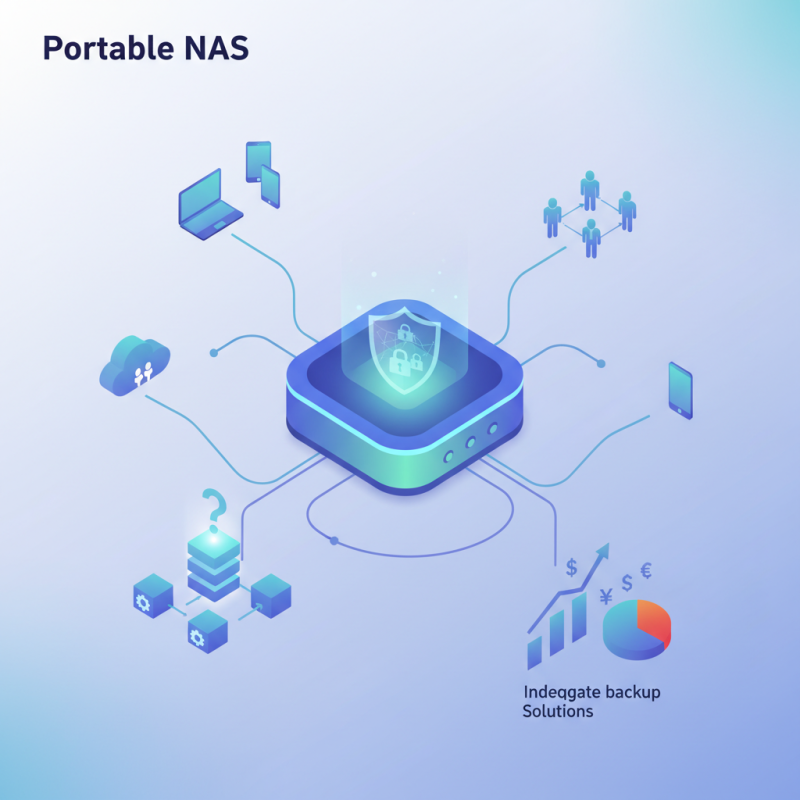
Understanding Portable NAS Storage: Definition and Features
Portable NAS storage stands out as a flexible solution for data management. It combines the benefits of a Network Attached Storage system with portability. Users can access and share files from any location, making it particularly useful for those on the move. Often small and lightweight, these devices can easily fit into a bag or backpack.
These portable systems typically feature multiple drive bays, allowing for cloud-like storage that is convenient. They use Wi-Fi or Ethernet connections for easy setup. Users can connect multiple devices, such as laptops or smartphones, simplifying file sharing. However, not all models are user-friendly. Some may require technical knowledge for effective setup.
Battery life can be a concern, depending on usage. The storage capacity varies widely, leading to choices that may confuse users. Some may feel overwhelmed when determining the best option for their needs. Additionally, security features can vary. Users should carefully consider encryption methods to protect sensitive data. It's crucial to weigh the pros and cons before investing in a portable NAS storage.
Key Components of Portable NAS Storage Devices
Portable NAS storage devices are gaining popularity for their convenience and efficiency. These devices allow users to access and share data across multiple devices easily. Key components of portable NAS include storage drives, network connectivity options, and power sources. Most models utilize hard disk drives (HDDs) or solid-state drives (SSDs) for storage. Recent data shows that SSDs are becoming the preferred choice, with the global SSD market projected to reach $200 billion by 2025. This shift underscores the importance of speed and reliability in data access.
Network connectivity is another crucial element. Many devices offer both Wi-Fi and Ethernet connections. Wi-Fi enables easy access while on the go, yet using Ethernet can provide faster speeds for larger file transfers. According to industry reports, over 40% of users prioritize connection speed in their decision-making process when selecting a portable NAS device. Battery life and power management also matter. Some devices boast extended battery durations, while others may struggle after a few hours of use. Users often report that they wish for longer uptime in their devices.
Understanding these components is essential for effective use. Many devices come with mobile apps for remote access. However, some users feel these apps lack functionality compared to desktop interfaces. Not every portable NAS device offers the same level of performance, and users must consider their specific needs carefully. Ports, file systems, and software compatibility can all impact user experience. Balancing features with usability can be challenging, but it is vital for anyone looking to invest in portable NAS storage.
How Portable NAS Storage Works: The Technical Aspects
Portable NAS (Network Attached Storage) systems serve as personal cloud solutions. They allow users to store, share, and access data from anywhere. These devices are compact and usually connect via Wi-Fi or Ethernet. Understanding their technical aspects can enhance their use.
Portable NAS systems commonly use solid-state drives (SSDs) or hard disk drives (HDDs). A study by IDC shows that SSD adoption in NAS solutions is growing at over 30% annually. This drive technology provides faster access speeds. Many systems also support multiple RAID configurations. This allows for data redundancy, enhancing protection against failures. Yet, consumers sometimes overlook the complexity of setup. Knowing the right RAID level for specific needs can be daunting.
**Tip:** Always read user manuals carefully. Each device has distinct features and limitations. Also, keep firmware updated to benefit from improvements and security patches.
Additionally, data encryption is another key feature. Portable NAS devices often come with built-in encryption. Reports show that nearly 80% of data breaches involve unencrypted devices. Users should implement strong passwords to enhance security. However, some may forget to change default settings, leaving the device vulnerable.
**Tip:** Regularly review your device security settings. A few minutes spent checking can save a lot of hassle later.
What is Portable Nas Storage and How Does It Work?
| Feature |
Description |
Benefits |
| Capacity |
Typically ranges from 1TB to 20TB, depending on the model. |
Ample storage for backups and media files. |
| Connectivity |
Supports USB, Wi-Fi, and Ethernet connections. |
Flexible access methods for multiple devices. |
| Data Access |
Files can be accessed remotely via the internet. |
Convenient access from anywhere, anytime. |
| Backup Options |
Automatic backup options for synced devices. |
Enhanced data security and redundancy. |
| User Interface |
Typically includes a web-based interface for ease of use. |
User-friendly management and configuration. |
| Power Supply |
Can be powered via AC adapter or USB. |
Portability for travel and on-the-go backup. |
Benefits of Using Portable NAS Storage for Personal and Professional Use
Portable NAS (Network Attached Storage) offers flexibility for both personal and professional use. It allows users to store, access, and share data seamlessly. According to a recent report by IDC, the global NAS market is expected to grow at a rate of 12.2% CAGR from 2022 to 2026. This growth signifies a rising demand for data accessibility and storage solutions that portable NAS satisfies.
For personal use, portable NAS is ideal for backing up photos, videos, and important documents. Users can carry data in a compact device, avoiding reliance on internet connections. A study by Statista reveals that 70% of consumers prioritize data accessibility on the go. However, not all users understand the complexities of network settings. Misconfigurations can lead to data loss or accessibility issues, which can be frustrating.
In professional settings, teams often work remotely, requiring effective collaboration. Portable NAS can enhance productivity by allowing secure file sharing. According to a survey by TechTarget, 64% of businesses have reported improved efficiency with NAS systems. Still, challenges persist. Users may overlook data security protocols, which could expose sensitive information. Balancing convenience and security remains a critical issue for many professionals.
Comparing Portable NAS Storage with Other Storage Solutions
Portable NAS (Network Attached Storage) offers unique benefits compared to traditional storage solutions. Unlike external hard drives, portable NAS devices allow multiple users to access files over the network. This feature enhances collaboration, especially for teams. They often support a range of devices, making them versatile tools for sharing data.
In comparison to cloud storage, portable NAS provides better control. Users own their data, avoiding potential privacy concerns. However, it may require more setup and maintenance. Cloud solutions often offer simpler interfaces. But they can incur monthly fees and depend on internet stability. Balancing convenience with ownership is important.
Even though portable NAS is beneficial, it has drawbacks. Set up can be complex for some users. Additionally, data backup processes may need improvement. Some users find network security settings confusing. This could lead to vulnerabilities. Overall, understanding these aspects aids in choosing the right storage solution.