Why You Need a Network Storage Rack for Efficient Data Management?
In today’s data-driven world, efficient data management is critical for businesses. A Network Storage Rack can greatly enhance this efficiency. According to a recent report by Market Research Future, the global market for network storage solutions is expected to grow by 12% annually over the next five years. This emphasizes the increasing importance of effective data organization and storage.
John Smith, a prominent expert in data management, stated, “Investing in a Network Storage Rack is no longer optional; it’s essential for optimal performance.” His insight highlights the necessity for organizations to prioritize structured storage solutions. Many companies overlook the value of organized data, leading to inefficiencies.
However, adopting a Network Storage Rack can be daunting. Companies may struggle with installation, choices, or even proper usage. The transition might expose gaps in current practices. Identifying these flaws is vital for improvement. Addressing such issues can transform a chaotic data environment into a streamlined system. Embracing this change can lead to better performance and productivity in the long run.

Understanding Network Storage Racks: An Overview of Their Benefits
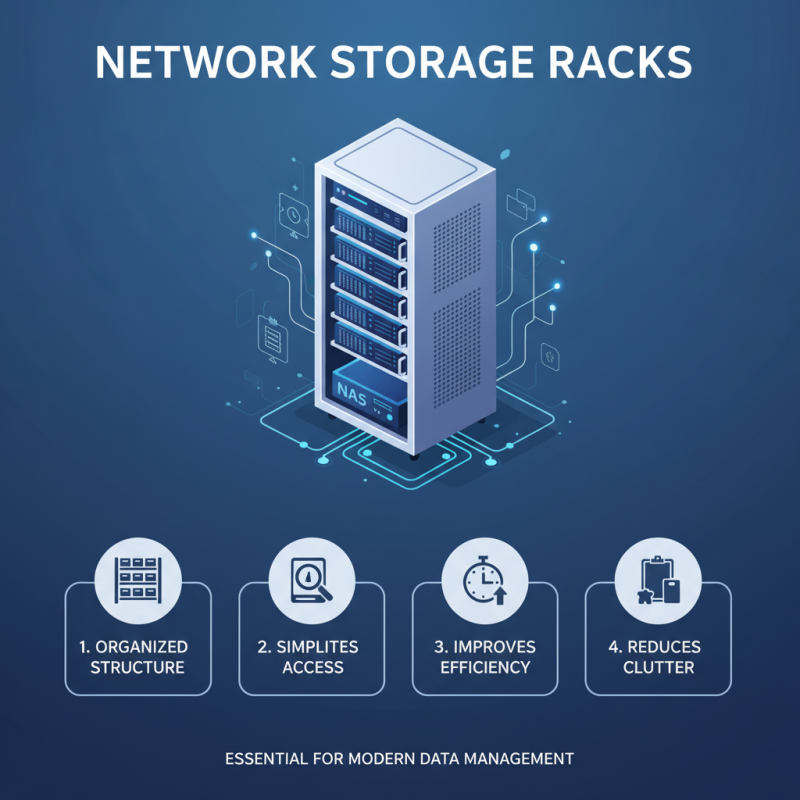
Network storage racks are essential for modern data management. They provide a dedicated space to organize and house multiple storage devices. This organized structure simplifies access and improves efficiency. When equipment is neatly placed, it eliminates clutter. Users can quickly locate the necessary devices.
One significant benefit of network storage racks is enhanced cooling and airflow. As devices operate, they generate heat. A well-ventilated rack helps maintain optimal temperatures. This prevents overheating and extends the lifespan of equipment. However, neglecting proper ventilation can lead to system failures. Regular maintenance is crucial for efficiency.
Moreover, these racks enable better cable management. Tangles of cables can create confusion and pose safety risks. By organizing cables, users can minimize hazards and streamline workflow. But, care must be taken during installation. Poorly managed cables can still lead to problems. Reflecting on these aspects helps improve overall data management strategies.
The Role of Network Storage Racks in Data Organization and Accessibility
A network storage rack is essential for organizing data efficiently. With more businesses relying on digital information, having a structured system is crucial. A well-designed rack can keep your devices clearly arranged. This results in easier access to essential data. When devices are organized, team members can locate files quickly, improving productivity.
Accessibility is enhanced by using a storage rack. Instead of rummaging through tangled cables or stacks of servers, data is presented in an orderly manner. Everything is in its place, which reduces frustration. However, some might overlook the importance of regular maintenance. Dust build-up can lead to failures. Moreover, improper labeling can create confusion. A thoughtful approach to storage organization makes a significant difference.
Visibility in a network storage environment matters. Color-coded cables and clearly tagged devices can simplify identification. Still, it’s easy to neglect these details under pressure. Consistent organization efforts may seem tedious, but they pay off. An efficient network storage rack is more than a physical structure; it’s a foundation for seamless data management.
Why You Need a Network Storage Rack for Efficient Data Management? - The Role of Network Storage Racks in Data Organization and Accessibility
| Feature |
Description |
Benefits |
| Space Efficiency |
Maximizes vertical space in data centers by stacking servers and storage devices. |
Reduces footprint allowing for more devices in limited spaces. |
| Cooling Optimization |
Facilitates better airflow and cooling configurations for equipment. |
Enhances performance and longevity of hardware. |
| Cable Management |
Includes designed pathways for organized cabling and connections. |
Reduces clutter, making troubleshooting easier and enhancing aesthetics. |
| Scalability |
Allows easy addition of new devices as data storage needs grow. |
Supports future expansion without major rewiring. |
| Access Control |
Can include locks and security features to protect sensitive data. |
Increases data security and compliance with regulations. |
Key Features of Efficient Network Storage Racks for Data Management
When managing data, a network storage rack plays a critical role. Efficient data management demands organization. A well-designed storage rack maximizes space and improves accessibility. According to industry reports, businesses can save up to 30% on space by optimizing storage solutions.
Key features of efficient network storage racks include adequate ventilation. Overheating can lead to equipment failure. DataCenter Dynamics mentions that 60% of server failures result from thermal issues. Proper airflow helps in maintaining optimal temperatures. Additionally, racks should support cable management. Poor cable organization can cause confusion and slow down operations.
Modularity is another essential feature. Racks that can grow with business needs are vital. A report from IDC states that 43% of companies face challenges due to insufficient scalability in their storage solutions. Balancing current needs with future expansions is crucial. Yet, companies often neglect this aspect, focusing only on immediate requirements. This oversight can disrupt operations later.
Best Practices for Setting Up and Maintaining Your Storage Rack
Setting up a network storage rack requires attention to detail. Proper organization allows for efficient data management. According to industry reports, organizations can improve retrieval times by 30% with a well-structured storage system. This efficiency translates directly to productivity.
Tips: Make sure to label every cable clearly. This helps during troubleshooting and maintenance. Use color-coded tags for easy identification. Organize your devices in a way that considers airflow and heat management. Neglecting this can lead to overheating, which affects performance and device lifespan.
Regular maintenance of the storage rack is crucial. Dust and debris can accumulate quickly, impacting airflow. According to a survey, 40% of IT professionals experience hardware failures due to poor maintenance. Schedule routine inspections to clean and reorganize as needed. Ensure that all connections are secure.
Tips: Document your setup and any changes you make. This will save time during future upgrades or troubleshooting sessions. Consider using rack-mountable data management tools to enhance your storage capabilities. A thoughtful approach can mitigate risks and improve overall data management.
Comparative Analysis: Network Storage Racks vs. Other Storage Solutions
When it comes to data management, network storage racks stand out. They provide organized storage for multiple devices in one setup. This contrasts with traditional storage solutions, like external hard drives. Hard drives can clutter workspaces and pose connectivity challenges. Racks streamline your setup, reducing cables and improving airflow. A well-ventilated rack can prevent overheating issues that often occur with improper storage.
In a comparative analysis, network storage racks offer scalability. As data needs grow, racks can adapt easily. This flexibility is not as prevalent in other storage methods. For instance, expanding an external hard drive’s capacity often requires purchasing a new device. Additionally, network storage racks allow for centralized management, making it simpler to monitor and maintain. This is a significant advantage for teams handling large volumes of data.
However, using a network storage rack isn’t without its challenges. They require a thoughtful arrangement of components. Improper organization can lead to confusion and inefficiencies. Plus, there’s a learning curve for new users. Setting up a network storage rack may seem daunting initially. Reflecting on these points leads to better data management practices overall. Embracing both the strengths and shortcomings helps ensure an effective solution for data storage.
Network Storage Racks vs. Other Storage Solutions