What is a Laptop Server and Why Do You Need One?
In the evolving world of technology, the concept of a "Laptop Server" emerges as a practical solution for many businesses. As of 2023, 68% of small to medium-sized enterprises are adopting portable server solutions to enhance flexibility and accessibility. A Laptop Server combines the power of a traditional server with the portability of a laptop, enabling users to manage tasks on the go. This innovation caters to the ever-increasing demand for remote work and mobile computing.
Industries are experiencing seismic shifts in their operational needs. According to a recent survey by Tech Insights, over 54% of companies reported a significant boost in productivity with mobile server solutions. Organizations must adapt. However, not all businesses fully recognize the potential of a Laptop Server. There exists a gap between awareness and implementation, leaving many in a dilemma about where to invest their resources.
Choosing the right technology can seem overwhelming. A Laptop Server is not a one-size-fits-all solution; it requires reflection on specific needs. Reliable performance, data management, and mobility are critical considerations. A Laptop Server offers the opportunity to streamline operations, but businesses must weigh the benefits against their unique circumstances.
What is a Laptop Server? Understanding Its Definition and Characteristics
A laptop server is a portable computer that serves as a server. It can handle tasks like data storage, hosting applications, and managing network resources. Many professionals prefer laptop servers for their flexibility. According to a study by MarketsandMarkets, the global server market is expected to grow significantly, highlighting the importance of portable solutions.
Laptop servers are characterized by their mobility and compact design. They usually have powerful processors and enough RAM to run server applications effectively. A notable feature is their ability to operate in various environments, making them suitable for remote work or field operations. This adaptability can significantly enhance productivity.
Tips: Always assess your specific needs before choosing a laptop server. Consider processing power and storage options carefully.
Another factor to consider is energy consumption. Laptop servers can be more efficient than traditional servers. According to the International Energy Agency, IT equipment makes up a significant portion of global energy use. Therefore, selecting an efficient laptop server can contribute to sustainability goals.
Before acquiring a laptop server, evaluate the trade-offs, such as performance versus portability. Some users may find that their laptop server lacks certain features of a full-sized server. Understanding these nuances is crucial for optimal performance in your operations.
Key Features of Laptop Servers: Performance Metrics and Specifications
Laptop servers have emerged as a versatile solution in various professional environments. Their performance metrics are crucial to assess. A good laptop server should offer a powerful CPU, ample RAM, and fast storage. Reports indicate that laptops with a high-performance Intel or AMD processor can significantly improve processing tasks. Most industry benchmarks suggest that a minimum of 16GB RAM is ideal for optimal multitasking.
Storage options also play a vital role. Solid State Drives (SSDs) provide faster data access compared to traditional Hard Disk Drives (HDDs). Companies often see performance boosts up to 6 times faster with SSDs. The overall user experience improves, particularly for data-intensive applications. Thermal management is another essential aspect, as overheating can lead to throttling. Proper cooling mechanisms must be evaluated, especially for prolonged use.
Tip: Always consider future-proofing your laptop server by opting for models that allow RAM upgrades. This can save costs and extend laptop longevity.
Tip: Monitor your device's performance metrics regularly. Tools for this can help you identify any bottlenecks and adjust workload accordingly. Balancing multiple tasks requires constant evaluation of system capabilities.
Benefits of Using Laptop Servers for Small Businesses and Remote Work
Laptop servers provide an excellent solution for small businesses and remote work setups.
According to industry reports, 62% of small businesses have moved to remote work, highlighting a growing demand for flexible computing solutions.
Laptop servers serve this niche perfectly by combining portability with server functionalities. They can be easily transported, fitting seamlessly into home offices or co-working spaces.
In addition, laptop servers are more cost-effective than traditional servers. A report from TechCrunch states that companies can save up to 40% in IT costs by adopting laptop servers.
They often require less upfront investment and minimal maintenance. This allows small businesses to allocate resources to other critical areas.
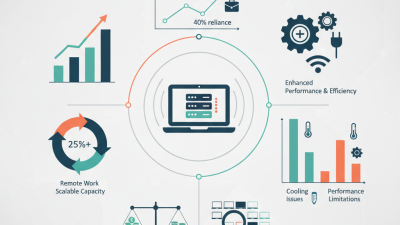
However, these servers may face performance limitations compared to larger setups. It's vital to assess business needs before implementing a laptop server.
Security is another concern. Many laptop servers lack robust security features inherent in dedicated servers.
A survey by Cybersecurity Ventures noted that 60% of small businesses experience data breaches due to inadequate security measures.
This emphasizes the importance of investing in security solutions when using laptop servers. Companies should weigh the benefits against potential vulnerabilities, ensuring a well-rounded approach to their IT infrastructure.
Comparative Analysis: Laptop Servers vs. Traditional Servers in Operations
When comparing laptop servers to traditional servers, several operational factors come into play. Laptop servers are portable, fitting easily into small spaces. They offer energy efficiency that often surpasses traditional models. For small businesses or remote teams, this mobility is a game-changer. Employees can work and collaborate from virtually anywhere, enhancing productivity.
However, there are drawbacks to consider. Laptop servers usually have limited processing power compared to robust stationary servers. This difference can lead to slower performance under heavy workloads. Organizations must assess their specific needs. If high performance and extensive data management are critical, traditional servers may be the better choice. The price of traditional servers, while higher, often reflects their reliability in demanding environments.
In terms of maintenance, laptop servers require regular checks to prevent overheating, especially when used extensively. Moreover, software updates can be more complex due to varying specifications. Balancing the portability of laptop servers against the power of traditional servers requires careful thought. Decision-makers need to evaluate their operational goals seriously.
Industry Trends: Growing Adoption of Laptop Servers in IT Infrastructure
The IT infrastructure landscape is changing rapidly. Increasingly, businesses are turning to laptop servers. These devices offer flexibility and mobility. They fit well in today's remote working environments. Companies realize that a laptop server can handle many tasks traditionally assigned to larger machines.
One major trend is the growing reliance on these servers for data processing. Laptop servers utilize powerful hardware, often surpassing basic desktops. This capability allows for efficient data management in small spaces. However, organizations face challenges in thermal management and hardware upgrades. They need to address these issues to fully capitalize on the benefits of laptop servers.
Another trend is the rise in cloud integration. Many laptop servers now support hybrid models. This approach combines local and cloud resources effectively. It's an exciting yet complex solution. Businesses must weigh the costs against potential gains. Adapting to these advances requires careful consideration and planning. As adoption grows, ongoing education will be essential for maximizing effectiveness.
Growing Adoption of Laptop Servers in IT Infrastructure