What is a Fiber Router and How Does It Improve Your Internet Speed
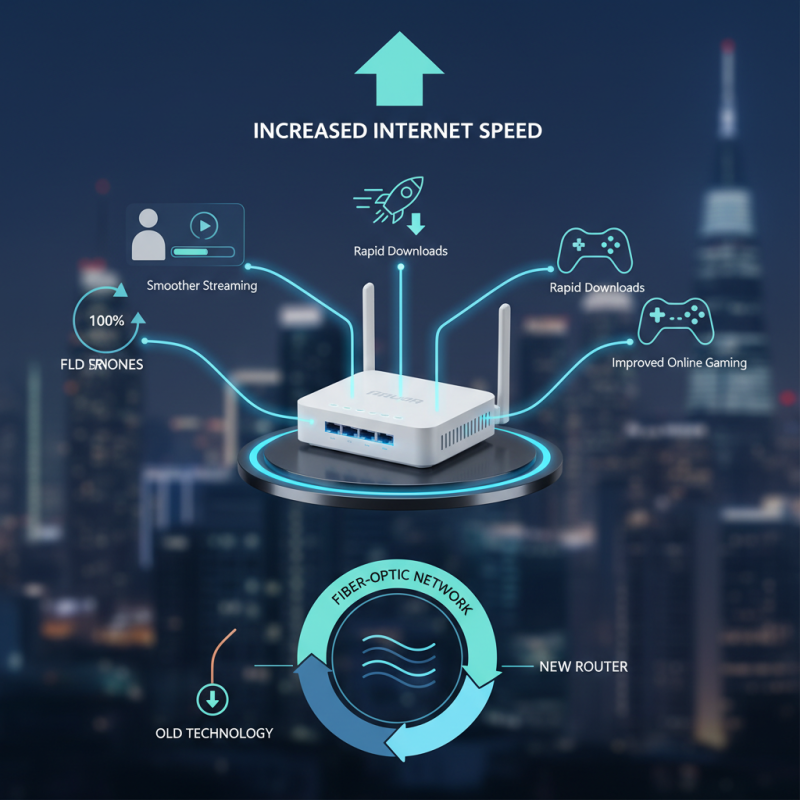
The emergence of the fiber router technology is revolutionizing the way we experience internet connectivity. Fiber routers are designed to harness the power of fiber-optic networks, which provide significantly higher speeds and greater bandwidth compared to traditional connection methods. According to a report published by the Fiber Optic Association, data transfer rates can reach up to 1 Gbps or even higher with fiber connections, allowing for smoother streaming, rapid downloads, and improved online gaming experiences. As industries continue to rely on high-speed internet, the importance of fiber routers cannot be overstated.
"Fiber Router New" signifies a cutting-edge advancement in the realm of home and business networking. Industry expert Dr. Sarah Thompson emphasized the transformative nature of these devices, stating, “Implementing fiber router technology not only enhances internet speed but also ensures reliability and efficiency in data transmission.” This insight highlights the essential role that fiber routers play in meeting the growing demand for speed and connectivity in today's digital age. As more households and businesses transition to fiber-optic systems, the potential for improved internet experiences will continue to rise, positioning fiber routers as a pivotal component of modern networking solutions.
What is a Fiber Router and its Role in Modern Internet Connectivity
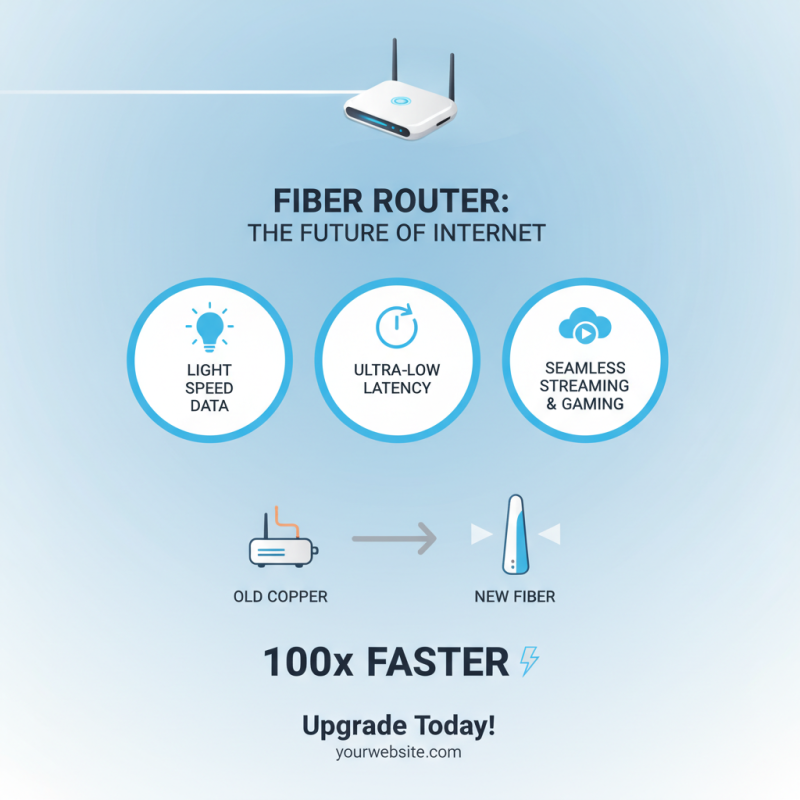
A fiber router plays a crucial role in modern internet connectivity by facilitating high-speed data transmission over fiber optic cables. Unlike traditional routers that use metal wires for data transfer, fiber routers utilize light signals to send and receive information, resulting in significantly faster internet speeds and reduced latency. This technology is particularly essential in today's digital age, where streaming, online gaming, and cloud-based services demand more bandwidth and reliability.
In addition to enhancing speed, fiber routers also expand the capacity for multiple devices to connect seamlessly. They are designed to handle high data loads, making them ideal for households and businesses with numerous connected devices. As more people rely on the internet for work, school, and entertainment, the need for robust and efficient connectivity solutions has never been more critical. By delivering faster and more reliable internet access, fiber routers are integral to meeting the demands of modern connectivity needs, ensuring users can experience seamless online interactions.
Key Technologies Behind Fiber Routers: How They Function
Fiber routers represent a significant advancement in the realm of internet technology, primarily due to their utilization of
fiber-optic communication. These devices leverage light signals transmitted
through thin glass or plastic strands, enabling data transfer at astounding speeds—often exceeding
1 Gbps. According to a report from the Fiber Broadband Association, fiber-optic networks can deliver download speeds
up to 25 times faster than traditional copper-based connections,
drastically reducing latency and buffering times.
The key technologies behind fiber routers include
wavelength division multiplexing (WDM) and
advanced modulation techniques. WDM allows multiple signals to be sent
simultaneously over the same fiber, effectively increasing bandwidth without requiring additional cables. Modulation techniques such
as orthogonal frequency-division multiplexing (OFDM) enhance the efficiency
of data transmission, enabling more information to travel simultaneously over the fiber. These technologies work in tandem to ensure
robust internet connectivity, accommodating high-demand applications like 4K video streaming
and online gaming.
Tips: When considering a fiber router, ensure that your home is equipped
with fiber-optic cabling for optimal performance. Additionally, investing in a router with quality hardware and support for the latest
Wi-Fi standards can further enhance your internet experience, ensuring you maximize the benefits of fiber technology. Regularly updating
your router’s firmware can also help maintain security and efficiency.
The Impact of Fiber Routers on Internet Speed and Latency
Fiber routers represent a significant advancement in internet technology, primarily due to their superior ability to manage data transmission compared to traditional routers. According to a report from the Fiber Broadband Association, homes equipped with fiber-optic connections can experience speeds upwards of 1 Gbps, dramatically reducing latency and enhancing overall internet performance. This reduction in latency is crucial for activities such as online gaming, video conferencing, and streaming high-definition videos, where delays can be particularly disruptive.
One of the key benefits of fiber routers is their ability to maintain consistent speeds regardless of the number of connected devices. Studies indicate that households with fiber networks can support multiple devices streaming content simultaneously without a decrease in performance. This capability is essential as more smart devices are integrated into our daily lives. Notably, fiber technology can achieve latency rates as low as 1-5 milliseconds, compared to 10-20 milliseconds commonly seen in cable broadband.
Tips for optimizing your internet experience with a fiber router include ensuring proper placement of the router for maximum coverage and minimizing interference from physical obstructions. Regularly updating the firmware of your router can also help maintain top-tier performance. Lastly, consider using Ethernet connections for stationary devices such as desktops and gaming consoles to achieve the best possible speeds and stability.
Impact of Fiber Routers on Internet Speed and Latency
Comparative Analysis: Fiber Routers vs. Traditional Routers
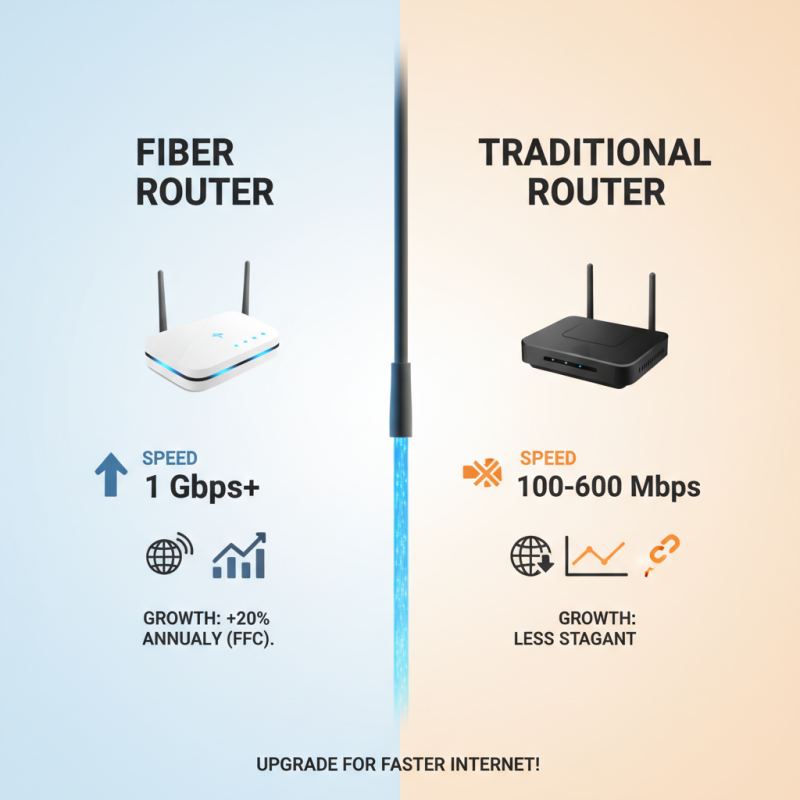
When it comes to internet connectivity, fiber routers present a substantial upgrade over traditional routers. A significant differentiator is the speed capabilities; fiber-optic technology can deliver speeds up to 1 Gbps or more, drastically outperforming the average speeds of traditional routers, which typically max out around 100 Mbps for DSL and 600 Mbps for cable connections. According to industry reports from organizations like the Federal Communications Commission (FCC), the number of fiber-optic connections is on the rise, growing by over 20% annually as consumers seek faster and more reliable internet services.
Additionally, fiber routers excel in latency, offering minimal delays compared to their traditional counterparts. Recent studies have shown that fiber connections can achieve latencies as low as 1 millisecond, making them ideal for bandwidth-sensitive applications like online gaming and video conferencing. In contrast, traditional routers often suffer from higher latency rates, especially as the number of connected devices increases. With households now averaging over 11 connected devices according to research from the Pew Research Center, the efficiency of a fiber router becomes even more critical in maintaining optimal internet performance across a busy network.
Future Trends in Fiber Router Technology and Internet Performance Improvement
The future of fiber router technology is poised to redefine internet performance and elevate user experience to unprecedented levels. As advancements in fiber optics continue, we can expect routers to not only support faster data rates but also exhibit enhanced reliability and reduced latency. Emerging trends include the integration of artificial intelligence for traffic management, allowing fibers to dynamically allocate bandwidth based on user needs. This smart management optimizes the network, especially during peak hours, ensuring seamless streaming and online gaming.
Additionally, the advent of Wi-Fi 6 and upcoming Wi-Fi 7 technologies will work hand-in-hand with fiber optics, enhancing overall speed and connectivity for multiple devices. Users will benefit from improved signal strength and coverage, significantly impacting homes with high device density. The focus on meshed networks further strengthens this, providing consistent high-speed internet throughout the household.
Tips: To take full advantage of the benefits offered by modern fiber routers, ensure that your home is equipped with compatible devices that support the latest Wi-Fi standards. Regularly updating your router’s firmware can also enhance performance and security. Finally, consider optimal placement of your router to minimize obstructions and maximize coverage, allowing you to fully enjoy the capabilities of high-speed internet.
What is a Fiber Router and How Does It Improve Your Internet Speed
| Feature |
Description |
Impact on Internet Speed |
| Bandwidth |
The maximum data transfer rate of a network or Internet connection. |
Higher bandwidth allows for faster download and upload speeds. |
| Latency |
The time taken for data to travel from source to destination. |
Lower latency results in quicker responses and smoother real-time applications. |
| Modulation Techniques |
Methods used to encode data for transmission. |
Advanced techniques can enhance data transmission efficiency. |
| Multi-Gigabit Support |
Capability to handle multiple gigabits per second. |
Enables support for simultaneous high-speed connections. |
| Quality of Service (QoS) |
Prioritization of certain types of network traffic. |
Improves performance for critical applications like streaming or gaming. |
| Future Trends |
Emerging technologies such as Wi-Fi 6 and 5G integration. |
Potential for even greater speeds and improved connectivity. |