Why Are Server Blades Essential for Modern Data Centers?
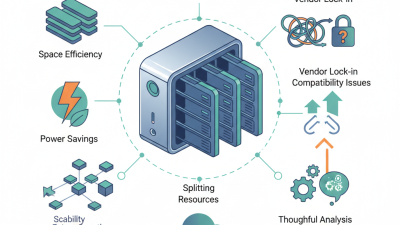
In the evolving landscape of modern data centers, "Server Blades" play a crucial role. John Doe, an expert in data center technology, states, “Server Blades increase efficiency and save space.” These compact units house multiple server components within a single chassis. This design is key to optimizing resources.
Server Blades enhance scalability. They allow data centers to respond quickly to changing demands. However, this efficiency comes with challenges. Managing multiple blades can complicate maintenance. Additionally, the initial investment for these systems can be substantial. Organizations must weigh immediate costs against potential long-term savings.
The benefits of Server Blades are clear. They enable high-density computing and energy efficiency. Yet, not every facility may be ready for such an upgrade. Transitioning to a blade-based system requires careful planning. As technology advances, the role of Server Blades will only grow. Data centers must consider these factors to thrive in a competitive environment.
The Definition and Functionality of Server Blades
Server blades are compact and efficient computing units that play a crucial role in modern data centers. These units consist of multiple servers housed within a single enclosure, which helps save space. Each blade operates independently, allowing for flexibility in processing power and application deployment. This modularity enhances resource management and streamlines operations.
One notable aspect of server blades is their ability to share resources. They can connect to shared power supplies and cooling systems. This reduces redundancy and can significantly lower operational costs. However, relying on shared resources may lead to potential downtimes. If one blade fails, the entire system could be affected. This is a concern that requires careful planning and maintenance.
The functionality of server blades extends beyond simple processing tasks. They can also enable quick scaling as demand increases. This agility is beneficial for businesses experiencing growth or seasonal fluctuations. Yet, organizations must reflect on managing these systems effectively. A lack of proper monitoring can lead to unexpected issues that disrupt service. Balancing efficiency with oversight is vital in today’s fast-paced digital environment.
Key Advantages of Using Server Blades in Data Centers
Server blades are increasingly recognized as vital components of modern data centers. A report from the International Data Corporation (IDC) highlights that blade servers can increase power efficiency by up to 20% compared to traditional server designs. This efficiency is crucial as energy costs soar in data centers. By consolidating multiple servers into a single chassis, businesses can significantly reduce their energy consumption and operational costs.
Moreover, server blades offer exceptional scalability. According to Gartner, data centers can improve capacity by 30% when integrating blade technologies. This scalability allows organizations to adapt swiftly to changing demands. Blade servers enable easier infrastructure upgrades, ensuring that companies stay competitive in a fast-paced market. Yet, as scalable as they are, managing a high-density environment requires careful planning. Overcrowding can lead to cooling inefficiencies if not properly monitored.
In terms of maintenance, downtime becomes a concern. A study from the Uptime Institute shows that 40% of data center outages arise from human error during maintenance or upgrades. While blade servers streamline physical space, they can complicate management if proper protocols aren’t in place. Users need to invest time in training staff and developing reliable processes. This reality presents a challenge that must be addressed as data centers evolve.
Comparison of Server Blades and Traditional Servers
Server blades and traditional servers serve distinct roles in modern data centers. Server blades are compact. They house multiple servers in one chassis. This design saves space and enhances cooling efficiency. According to a recent industry report, data centers can reduce power consumption by up to 30% when adopting blade technology. This reduction is essential as energy costs increase.
On the other hand, traditional servers often require more physical space. They can be less energy-efficient when compared to blades. In a study by a leading tech research firm, traditional servers consumed 40% more energy than blades in similar workloads. However, organizations may face challenges when transitioning. The initial setup costs can be high, and compatibility issues may arise with legacy systems.
Flexibility is another area where blades shine. They allow for quick upgrades and scaling. Traditional servers, however, are less adaptable. They often require downtime for upgrades. This can impact a company's operations. Embracing blade technology may seem daunting, but the long-term benefits are compelling. Data centers need to consider these factors carefully.
Impact of Server Blades on Data Center Efficiency and Scalability
Server blades are increasingly recognized for their role in boosting data center efficiency and scalability. According to a report from IDC, server blades can reduce energy consumption by up to 75% compared to traditional rack servers. This is significant in an industry where power costs are rising. By concentrating resources within a smaller footprint, data centers can achieve higher processing power without the associated increase in physical space.
Moreover, scalability is a critical concern for modern data centers. Research from Gartner shows that server blades enable rapid deployment of IT resources. This agility allows companies to adapt quickly to changing workloads. With server blades, provisioning can be done in minutes, not days. As cloud services expand, this flexibility becomes paramount for businesses that rely on rapid scaling.
However, challenges remain. Effective management of server blades is crucial, as misconfigurations can lead to inefficiencies. A study by Forrester highlighted that 30% of IT managers experience difficulties in managing blade environments. Addressing these issues is essential for maximizing the potential of blade technology. The path to an efficient and scalable data center is fraught with pitfalls, but the benefits of server blades continue to drive organizations toward their adoption.
Impact of Server Blades on Data Center Efficiency
Future Trends: The Evolution of Server Blades in IT Infrastructure
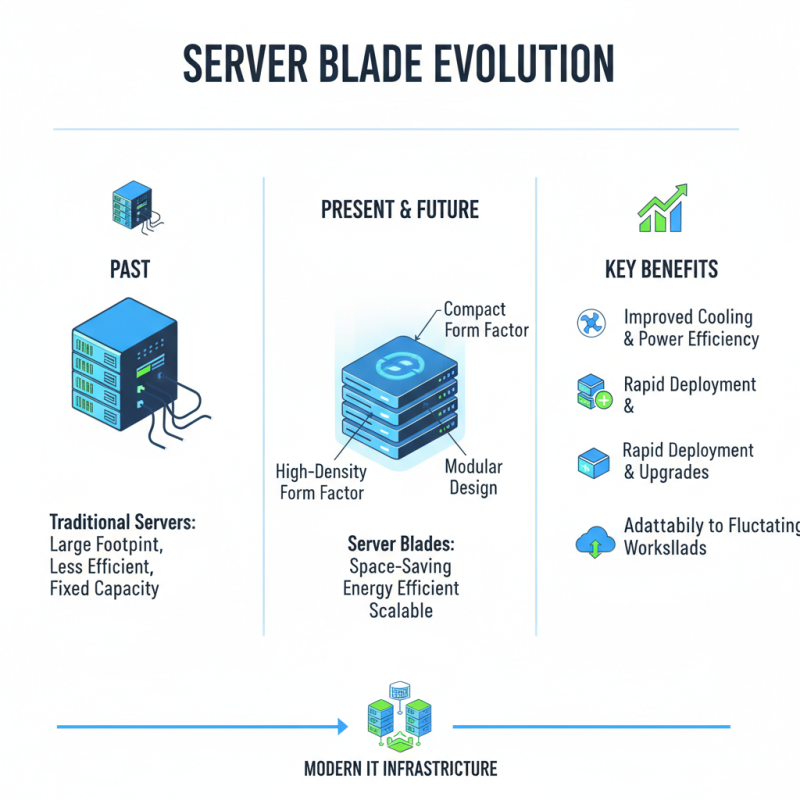
The evolution of server blades plays a crucial role in shaping modern IT infrastructure. As data demands increase, organizations are looking for efficiency and scalability. Server blades are at the forefront, enabling high-density configurations in a compact form factor. This design fosters better cooling and power efficiency. The ability to add or remove blades quickly allows data centers to adapt to fluctuating workloads.
However, the rise of cloud computing and virtualization creates mixed feelings about the future of server blades. While they offer versatility, some argue they might become less relevant. Concerns about dependency on specific technologies also arise. Additionally, managing multiple blades can complicate system maintenance. Innovations in software-defined infrastructure challenge the necessity of traditional server blades, questioning their longevity in the market.
Data center managers must rethink their strategies. The current trend shows a blend of various architectures. While blades have their strengths, they must evolve alongside other technologies. Flexibility and integration will determine their future success in a rapidly changing landscape. The question remains: will they adapt effectively or become relics of the past?