Why Choose Enterprise Routers for Your Business Needs?
In today’s fast-paced digital landscape, choosing the right technology is crucial for business success. Enterprise Routers play a significant role in ensuring network reliability and scalability. A recent report by Gartner indicates that businesses utilizing advanced routers can improve operational efficiency by up to 30%. This statistic underscores the importance of investing in robust network infrastructure.
Dr. Jennifer Lee, an industry expert and author of "Networking for the Future,” emphasizes, “Enterprise Routers are not just a tool; they are the backbone of modern business communication.” Her insights highlight the critical function these routers serve in delivering secure and efficient data management.
However, not all enterprise routers are equal. Companies must evaluate their specific needs before making a decision. The complexity of options available can lead to challenges in selection. It’s essential to analyze factors such as bandwidth, security features, and user requirements. These considerations can make a decisive difference. Inadequate choices could lead to performance issues down the line. Thus, investing time in understanding the landscape of Enterprise Routers will significantly benefit organizational growth.

Understanding the Fundamentals of Enterprise Routers
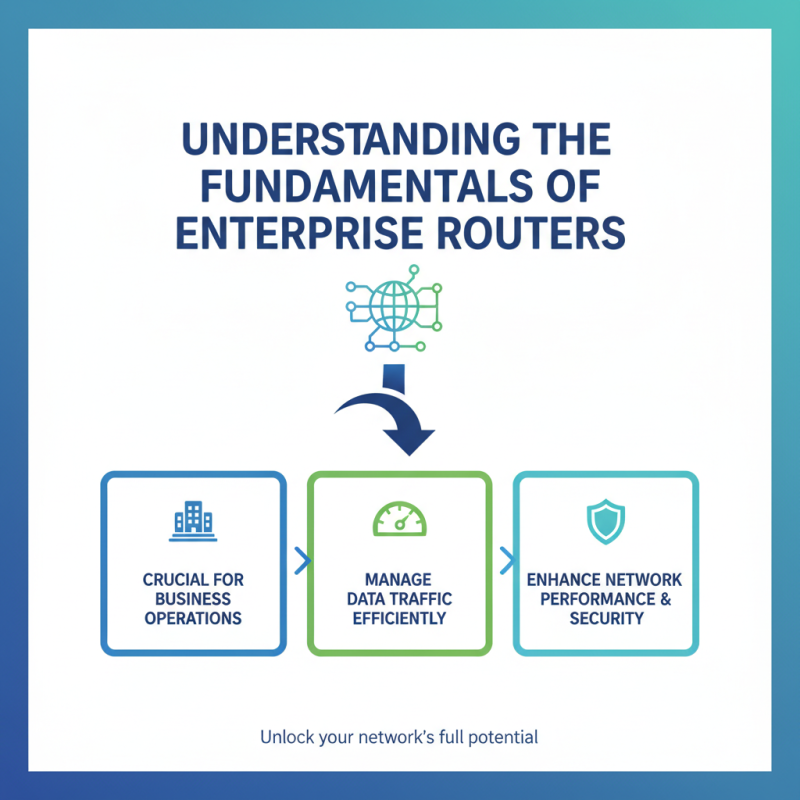
Enterprise routers are crucial for business operations. They manage data traffic efficiently. Understanding their fundamentals can greatly enhance your network's performance and security.
These routers come with advanced features. They support virtual private networks (VPNs), enabling secure remote connections. High throughput is essential for businesses with heavy data workloads. Scalability is another crucial aspect. As your business grows, your network needs to adapt. This requires routers that can handle increased demands seamlessly.
However, selecting the right router can be challenging. Many options exist, and not all are suitable for every business. Misjudging network requirements can lead to inefficiencies. Evaluate your network needs carefully. Budget considerations also matter, as reliable equipment requires investment. Consider the future demands of your business as well. Growth often brings new challenges, and your router should be equipped to tackle them.
Key Features of Enterprise Routers for Business Operations
Enterprise routers are critical for modern business operations. They provide robust capabilities that enhance connectivity and data management. According to Cisco's Annual Internet Report, enterprise networks will see a dramatic increase in data traffic. By 2023, 83% of business workloads will occur in the cloud. This shift demands reliable routers that can support extensive bandwidth and reduce latency.
A key feature of enterprise routers is their ability to support multiple WAN connections. Businesses may need to handle various data streams simultaneously. Load balancing across these connections optimizes performance. Research from IHS Markit indicates that organizations implementing advanced routing technologies can improve application performance by 40%. This is essential for maintaining productivity.
Security is another significant aspect. Enterprise routers often include advanced security protocols. These safeguards protect sensitive data from evolving cyber threats. The 2022 Cybersecurity Report highlighted that 64% of businesses faced cyberattacks last year. Implementing enterprise-grade routers mitigates these risks. However, it's crucial for businesses to regularly update their network security features. Ensuring ongoing reliability helps them stay ahead of potential vulnerabilities.
Key Features of Enterprise Routers for Business Operations
Comparative Advantages of Enterprise Routers vs. Consumer Routers
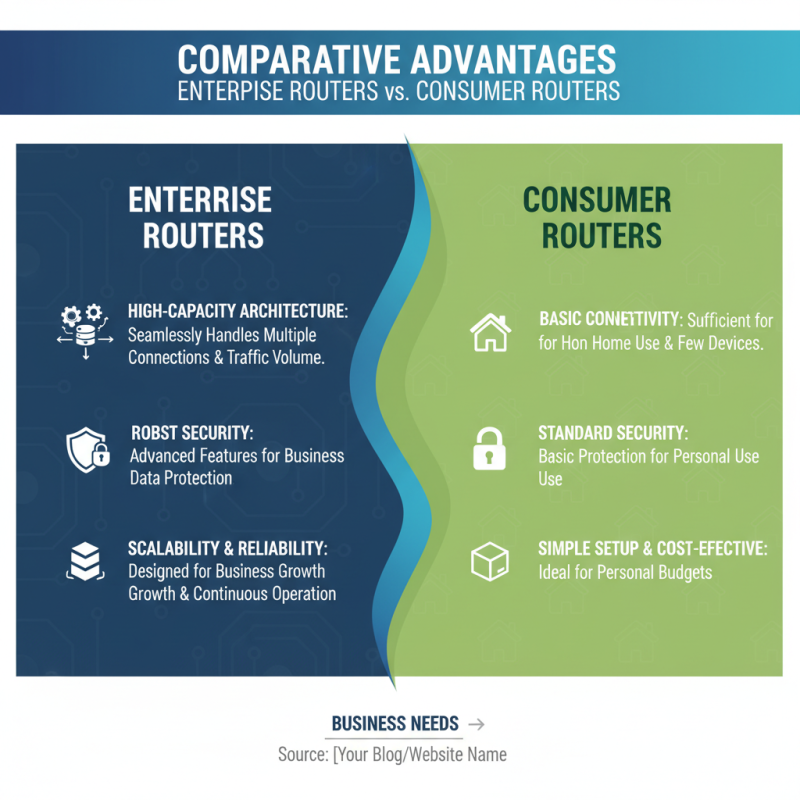
When considering networking for businesses, enterprise routers stand out for several reasons. Their architecture is designed to handle multiple connections seamlessly. This means they can support a higher volume of traffic without impacting performance. Additionally, enterprise routers typically offer more robust security features, essential for protecting sensitive business data.
Consumer routers often fall short in scalability. As a business grows, its networking needs evolve. Enterprise routers can accommodate numerous devices and users, unlike their consumer counterparts. They also provide advanced management options. These features allow IT teams to monitor and optimize network performance efficiently.
Enterprise routers can seem intimidating at first. They often come with a complexity that requires specialized knowledge. However, investing time in understanding these systems can lead to significant long-term benefits. The trade-off for this initial learning curve is a network tailored to business needs. It’s about balancing performance, security, and scalability effectively.
Scalability and Customization Benefits of Enterprise Routers
Enterprise routers provide essential scalability and customization for businesses. Recent studies show that 84% of enterprises report needing to scale their networks rapidly due to growth. With the right router, businesses can adjust bandwidth, accommodate more users, and improve performance seamlessly.
The customization options available in enterprise routers are crucial. Businesses can configure settings to meet specific operational needs. A report from the International Data Corporation indicates that 70% of IT leaders believe tailored network solutions enhance efficiency. However, achieving optimal customization requires careful planning and expertise. Configuration errors can lead to downtime or inadequate performance.
Scalability also comes with challenges. A well-structured plan is necessary to ensure the network grows with the business. Misjudgment in scaling can strain resources or overspend on unnecessary capabilities. Hence, businesses must weigh benefits against potential pitfalls. This thoughtful approach to scalability can make a significant difference in network performance and reliability.
Securing Business Networks with Advanced Enterprise Router Solutions
In today’s digital landscape, securing your business network is paramount. Advanced enterprise routers serve as the gatekeepers of this security. According to the latest report from Cybersecurity Ventures, global cybersecurity spending is projected to surpass $300 billion by 2024. Investing in robust router solutions could significantly reduce the chances of breaches and enhance data privacy for organizations.
Enterprise routers come equipped with features like advanced firewalls and intrusion prevention systems. These capabilities help protect sensitive data and deter cyber threats. For instance, routers that support VPN connections encrypt data traffic, ensuring secure remote access for employees. This is increasingly crucial as more businesses adopt hybrid work models.
Tip: Regularly update your router firmware. Security updates patch vulnerabilities and enhance firewall effectiveness.
While enterprise routers offer sophisticated solutions, they also require proper configuration and ongoing management. Poorly configured routers could lead to security loopholes. Businesses should consider partnering with IT professionals to optimize their router settings and security protocols.
Tip: Conduct routine security audits to identify any potential weaknesses in your network.
Investing in enterprise routers not only secures your business but also fosters trust among clients and customers, showing that you prioritize their data integrity.