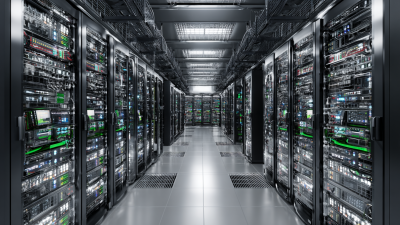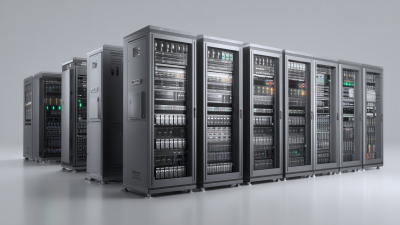
In the rapidly evolving landscape of technology, the significance of Data Center Servers continues to escalate, particularly in 2023. As organizations strive to enhance their operational performance and efficiency, understanding the emerging trends in data center infrastructure becomes paramount. This year, we witness an array of innovations and strategies that not only boost the performance of Data Center Servers but also align them with the needs of a more agile and environmentally conscious business environment.
From advancements in server virtualization to the integration of AI-driven solutions, the trends spotlighted in our exploration promise to reshape the way organizations manage their data and resources. Additionally, the shift towards energy-efficient operations is redefining how Data Center Servers are designed and deployed, ensuring sustainability goes hand in hand with performance. As we delve into the top ten trends driving Data Center Server advancements in 2023, we will uncover essential insights that can empower IT leaders to optimize their data center operations while staying ahead in a competitive market.
In 2023, emerging technologies are playing a crucial role in transforming data center operations, significantly enhancing performance and efficiency. One of the key trends is the integration of artificial intelligence (AI) and machine learning (ML) to optimize resource allocation and energy consumption. According to a recent report by IDC, organizations employing AI-driven solutions in their data centers have reported up to 30% reductions in operational costs, demonstrating the potential of these technologies to streamline processes and increase overall efficiency.
Another noteworthy development is the rise of edge computing, which is enabling data centers to process information closer to the source. This shift is not only improving latency but also supporting the growing demand for real-time data analytics. A study by Gartner highlights that by the end of 2023, around 75% of enterprise-generated data will be processed at the edge, indicating a significant pivot in how data centers approach their architecture and service delivery. Coupled with advancements in green technologies, such as liquid cooling and renewable energy sources, the data center landscape is evolving to meet the high-performance standards required in today's digital economy.
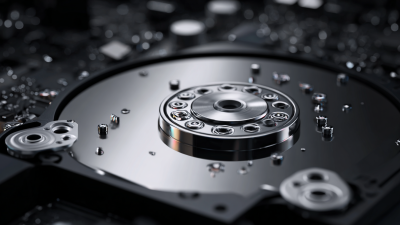
Innovative cooling solutions are at the forefront of maximizing energy efficiency in data centers in 2023. As the demand for data processing and storage continues to surge, traditional cooling methods are becoming unsustainable. According to a report by the U.S. Department of Energy, data centers account for about 1.8% of the total electricity consumption in the United States, reflecting the urgent need for more efficient cooling systems. One emerging trend is the use of liquid cooling technologies, which can improve energy efficiency by up to 90% compared to conventional air cooling systems.
Additionally, advancements in cooling technologies such as hot aisle containment and thermal energy storage are significantly contributing to energy savings. The International Data Corporation (IDC) anticipates that the adoption of these innovative cooling methods could reduce operational costs by as much as 20-30% by 2024. In particular, smart cooling solutions that dynamically adjust based on real-time temperature and workload data are proving to substantially lower energy footprints while maintaining optimal server performance. Implementing such systems not only demonstrates a commitment to sustainability but also enhances the overall efficiency and reliability of data center operations.
| Trend | Description | Impact on Performance | Impact on Efficiency |
|---|---|---|---|
| AI-Driven Management | Utilizing artificial intelligence to optimize data center operations and resource allocation. | Increased processing speed and workload distribution. | Reduces energy consumption through optimized resource usage. |
| Sustainable Cooling Solutions | Innovative cooling technologies such as liquid cooling and free cooling methods. | Enhanced server lifespan and performance consistency. | Significant reduction in energy use and carbon footprint. |
| Edge Computing | Processing data closer to where it's generated to improve response times. | Decreases latency and increases processing speed. | Efficient bandwidth usage and reduced transmission costs. |
| Modular Data Centers | Scalable data center designs that allow for easy upgrades and expansions. | Flexibility to adapt to changes in demand. | Optimized space and resource utilization. |
| Green Certifications | Pursuing certifications for energy efficiency and environmental responsibility. | Improved reputation and customer trust. | Encourages the implementation of energy-saving technologies. |
| Automation and Orchestration | Using software tools to automate management of servers and workloads. | Improved response time and throughput. | Lower operational costs due to reduced manual intervention. |
| Hyper-convergence | Combining storage, computing, and networking into a single system. | Improved compatibility and performance across systems. | Streamlined operations and reduced hardware costs. |
| Data Center Infrastructure Management (DCIM) | Integrated monitoring and management of data center assets. | Enhanced decision-making capabilities. | Optimizes energy usage and resource allocation. |
| Resilience and Disaster Recovery | Development of strategies to ensure business continuity. | Improves reliability of services. | Minimizes downtime-related energy waste. |
| Blockchain for Data Security | Using blockchain technology to enhance data security and integrity. | Strengthens data protection and access speed. | Reduces overhead costs for data security. |
In 2023, advanced server virtualization techniques have emerged as vital tools for enhancing performance in data centers. These techniques allow multiple virtual machines (VMs) to run on a single physical server, effectively maximizing resource utilization. By implementing dynamic resource allocation, data centers can adapt to varying workloads, ensuring optimal performance without unnecessary energy consumption. This flexibility not only boosts efficiency but also reduces operational costs, making virtualization a cornerstone of modern IT infrastructure.
Moreover, the integration of AI-driven management tools alongside virtualization technologies further elevates operational capabilities. These tools can predict resource demands based on current usage trends, allowing for proactive adjustments in real-time. This predictive approach minimizes latency and enhances overall system responsiveness, which is crucial for applications requiring high performance. As data centers continue to evolve, embracing these advanced virtualization strategies will be essential for organizations aiming to achieve both enhanced performance and operational efficiency in an increasingly competitive landscape.
This chart illustrates the trends in server virtualization techniques that are enhancing performance and efficiency in data centers for the year 2023.
In 2023, the integration of artificial intelligence (AI) into data centers is transforming the landscape of predictive maintenance. By harnessing machine learning algorithms and real-time data analytics, operators can anticipate equipment failures before they occur, thereby minimizing downtime and enhancing operational efficiency. The ability to predict when a server might fail allows data center managers to schedule maintenance during off-peak hours, ensuring that services remain uninterrupted.
Tips for Implementation:
1. Start by collecting and analyzing historical performance data of your equipment to identify patterns that may indicate future failures.
2. Invest in AI tools that can process vast amounts of data in real-time, allowing for more accurate predictions and quicker responses to issues.
As AI systems learn and evolve, they become increasingly adept at recognizing anomalies that human operators might overlook. This proactive approach not only enhances the reliability of server operations but also leads to significant cost savings as resources are allocated more effectively. By embracing these technologies, data centers can achieve a new level of performance and sustainability.
More Tips:
1. Consider a phased approach to integrating AI, starting with critical components that have the highest impact on your operations.
2. Regularly update your AI models with new data to ensure they adapt to changing conditions and continue to provide accurate predictions.
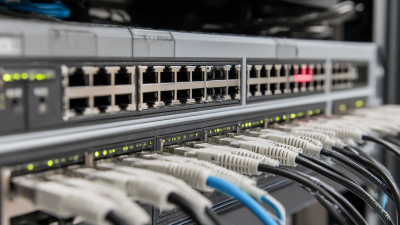
As organizations increasingly rely on data-driven decision-making, optimizing network architecture becomes crucial for fostering improved data flow and scalability. A well-structured network not only enhances the speed and reliability of data transmission but also allows for better resource allocation across various applications. Implementing a layer of virtualization can significantly streamline the management of network resources, enabling companies to efficiently handle fluctuating workloads while maintaining high levels of performance.
Moreover, the integration of advanced technologies such as Software-Defined Networking (SDN) contributes to greater flexibility and adaptability within data center environments. By decoupling the control plane from the data plane, SDN facilitates centralized management that can dynamically adjust to changing data demands. This adaptability is particularly essential as organizations expand their digital footprints, ensuring that network architecture can scale seamlessly without sacrificing performance or reliability.
Ultimately, the focus on optimizing network architecture will play a pivotal role in driving efficiency and enhancing the overall capabilities of data centers in 2023 and beyond.