Why Choosing the Right Data Center Server Matters for Your Business?
Choosing the right Data Center Server is crucial for any business. Expert Richard Smith, a leading voice in the data center industry, emphasizes this by stating, "A solid server foundation can propel your business forward." This highlights the importance of selecting the right infrastructure.
Data Center Servers are the backbone of your IT operations. They handle processes that keep your business running smoothly. However, many companies overlook their significance. Inadequate servers can lead to disruptions, slow performance, and unhappy customers. This is a risk that no business can afford.
Investing in the right Data Center Server isn’t just a technical choice; it’s a strategic move. It requires careful consideration of various factors like scalability, reliability, and energy efficiency. Unfortunately, businesses often rush this decision, leading to costly mistakes. Reflecting on your server choice may uncover areas for improvement that could drive growth and innovation.
Understanding the Role of Data Center Servers in Business Operations
Data center servers play a crucial role in modern business operations. They are the backbone of IT infrastructure, processing vast amounts of data. According to a report by MarketsandMarkets, the global data center market is expected to grow from $187.35 billion in 2022 to $345.82 billion by 2026. This growth highlights the importance of selecting the right server for specific business needs.
When choosing a data center server, consider factors like scalability and reliability. A good server should adapt to your business growth. Additionally, performance affects operational efficiency. A poorly performing server can lead to downtime, costing businesses an average of $5,600 per minute, as per a study by Gartner. Businesses can’t afford such losses.
Tip: Assess your current and future data needs. Make sure your server can manage increasing traffic and data loads.
The right server also impacts security. Data breaches can have catastrophic consequences. In 2021, the average cost of a data breach was nearly $4.24 million, according to IBM. Investing in a robust server with strong security features is critical.
Tip: Perform regular security audits. This practice helps identify vulnerabilities before they become threats.
Key Factors to Consider When Choosing a Data Center Server
Choosing the right data center server is crucial for any business. A report from Gartner indicates that 70% of companies struggle with server performance and scalability. This can lead to downtime, impacting customer satisfaction. Quality server performance directly influences operational efficiency.
When evaluating servers, consider scalability first. How easily can you upgrade? A flexible architecture allows for future growth. Also, think about energy efficiency. Data centers consume around 2% of the world's energy. Opting for energy-efficient solutions can reduce costs significantly.
Security is another key factor. In 2022, 43% of cyber-attacks targeted small businesses. Ensuring that your server has robust security features is vital. Do not overlook redundancy either. It helps maintain uptime during failures. A well-planned server setup can save businesses time and money in the long run. Thoughts on these factors could lead to improvements.
Comparing Different Types of Data Center Servers for Your Needs
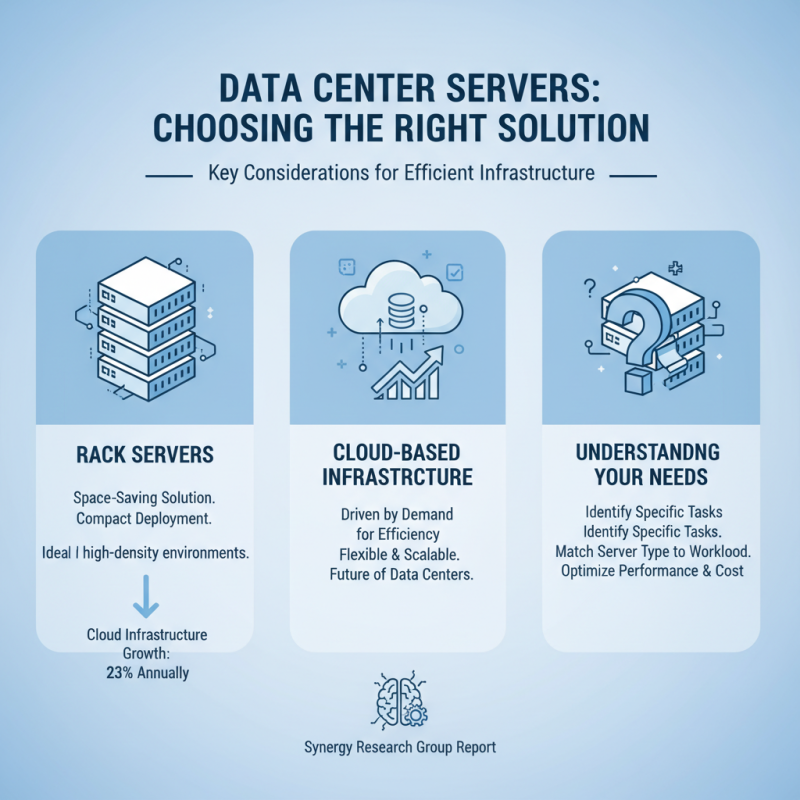
When it comes to data center servers, understanding your specific needs is essential. Different server types exist, each designed for unique tasks. For instance, rack servers are ideal for space-saving solutions. They allow for the deployment of multiple servers in a compact area. A report by Synergy Research Group states that cloud-based infrastructure is projected to grow 23% annually. This growth reflects the demand for efficient server solutions in data centers.
Blade servers are another option. They offer high performance while minimizing energy consumption. This characteristic appeals to businesses aiming for sustainability. According to a Gartner report, up to 30% of IT budgets are now allocated to energy costs. This shift emphasizes the importance of choosing energy-efficient servers. While blade servers present advantages, they require careful planning. They take up significant resources and pose management challenges.
Storage servers, on the other hand, are vital for data-intensive operations. Businesses storing large quantities of data need reliable storage systems. A study by IDC projects that the global datasphere will reach 175 zettabytes by 2025. Not all businesses are prepared for this massive influx of data. Each type of server presents trade-offs, such as cost, performance, and scalability. Reflecting on these issues helps businesses make informed decisions.
Evaluating Cost vs. Performance in Data Center Server Selection
When selecting a data center server, balancing cost and performance is critical. Recent industry reports indicate that companies often underestimate the long-term implications of these choices. A server's initial cost can be misleading. In fact, a cheaper server might lead to higher operational costs due to inefficiencies. A study by the International Data Corporation reveals that performance-driven solutions can improve overall productivity by up to 30%.
Many businesses overlook energy efficiency when making purchasing decisions. Energy costs can account for up to 30% of total data center expenses. Thus, investing in servers optimized for energy consumption can significantly reduce these ongoing costs. Moreover, latency issues can arise with lower-performance servers, affecting application responsiveness. A delay of just seconds can lead to customer dissatisfaction, illustrating a high cost of poor performance.
Companies must also consider scalability. As businesses grow, their data demands increase. A server that meets current needs may not handle future requirements effectively. A report from Forrester Research indicates that 60% of organizations struggle with capacity planning. Choosing a flexible server solution can mitigate this risk. Balancing short-term costs against long-term performance is a challenge that requires thoughtful consideration.
Why Choosing the Right Data Center Server Matters for Your Business? - Evaluating Cost vs. Performance in Data Center Server Selection
| Server Model |
Cost ($) |
CPU Cores |
RAM (GB) |
Storage (TB) |
Performance (MIPS) |
| Model A |
2000 |
8 |
32 |
2 |
15000 |
| Model B |
4000 |
16 |
64 |
4 |
30000 |
| Model C |
10000 |
32 |
128 |
8 |
60000 |
| Model D |
7500 |
24 |
96 |
6 |
45000 |
Future-Proofing Your Business with Scalable Data Center Solutions
Choosing scalable data center solutions is essential for future-proofing your business. Research indicates that 60% of companies struggle to adapt to new technologies due to outdated infrastructures. The right server setup can prevent these issues. A flexible architecture allows businesses to scale their operations efficiently.
The global data center, forecasted to reach over $200 billion by 2026, emphasizes this trend. Firms lacking scalability may find themselves at a competitive disadvantage. Upgrading servers can be a daunting task. Many companies hesitate, fearing the costs and potential disruptions. However, investing in adaptable solutions often leads to long-term savings.
It’s not just about having the latest hardware. It’s about ensuring that your data center aligns with future demands. A study showed that companies with scalable solutions experience 25% faster growth. As customer needs change, businesses must be ready to pivot. Failure to do so can result in lost opportunities and reduced market share.
Data Center Server Choices and Their Impact on Business Performance