How to Choose the Best Router Adapter for Your Needs?
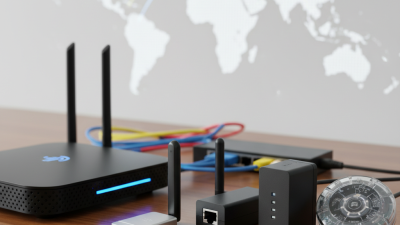
In the rapidly evolving world of technology, choosing the right Router Adapter can significantly impact your internet experience. According to James Herriot, an expert in networking technology, "A good Router Adapter bridges the gap between devices and your network." This highlights the importance of selecting a model that meets your specific requirements.
When searching for the best Router Adapter, consider the compatibility with your existing devices. Not all adapters work with every router. Look for features like speed ratings and range specifications. A poorly chosen adapter might underperform and frustrate you daily. Spending a little time to research can lead to a much smoother experience.
Think about future needs, too. The demands on your network may increase as more devices connect. A reliable Router Adapter should scale with your needs. Reflection on your usage patterns is crucial. Are you a heavy gamer or a casual browser? Your choices should align with your online habits to ensure efficiency and performance.

Understanding the Different Types of Router Adapters Available
When choosing a router adapter, understanding the types available is crucial. Different routers work with various adapters. The two main types are wired adapters and wireless adapters. Wired adapters often offer faster speeds. They are better for streaming and gaming. For instance, a report by the Federal Communications Commission (FCC) suggests that wired connections can be up to 90% faster than wireless connections in ideal conditions.
Wireless adapters, on the other hand, provide more flexibility. They allow multiple devices to connect without the mess of cables. However, signal interference can sometimes be an issue. A study from the Networking Industry Association indicates that up to 30% of users experience reduced speeds due to interference. This highlights how crucial it is to choose the right adapter for your environment.
Ethernet adapters, commonly used in homes, vary in capacity. A common gigabit ethernet adapter can handle speeds up to 1,000 Mbps. This is often sufficient for most household needs. However, in larger settings, users might struggle with bandwidth. Ensuring you select an adapter that meets both current and future needs is essential to avoid limitations later.
Router Adapter Types and Their Popularity
Key Features to Consider When Selecting a Router Adapter
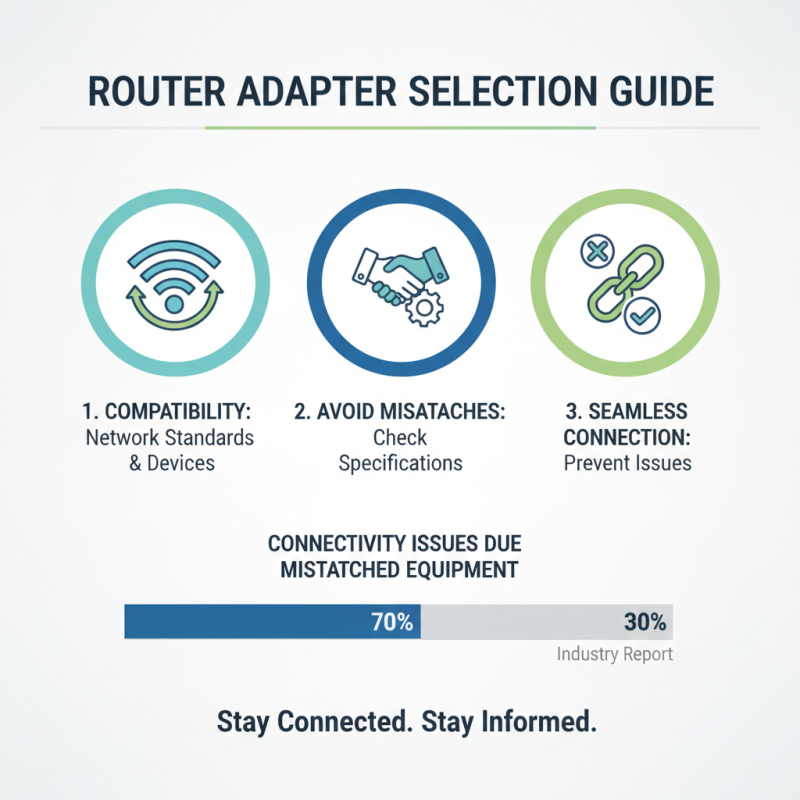
When selecting a router adapter, one must consider various crucial features. Compatibility with your existing network is paramount. Many adapters only work with specific devices or standards. According to industry reports, nearly 70% of consumers experience connectivity issues due to mismatched equipment. Always verify the adapter's specifications to ensure a seamless connection.
Another essential factor is speed. Router adapters can vary significantly in speed capabilities. For instance, some may offer speeds of up to 1300 Mbps. However, real-world performance often falls short due to factors like distance and interference. A speed rating of 300 Mbps might suffice for simple browsing, but heavy users should aim higher.
Range is equally significant. Some adapters claim extensive coverage, but physical barriers can impact performance. Consider your home's layout when selecting an adapter. If your space is large, opt for one with enhanced range features. Reports indicate that nearly 25% of users are dissatisfied with their router's coverage. Hence, investing in a reliable adapter can greatly improve your network experience.
Assessing Compatibility with Your Existing Networking Equipment
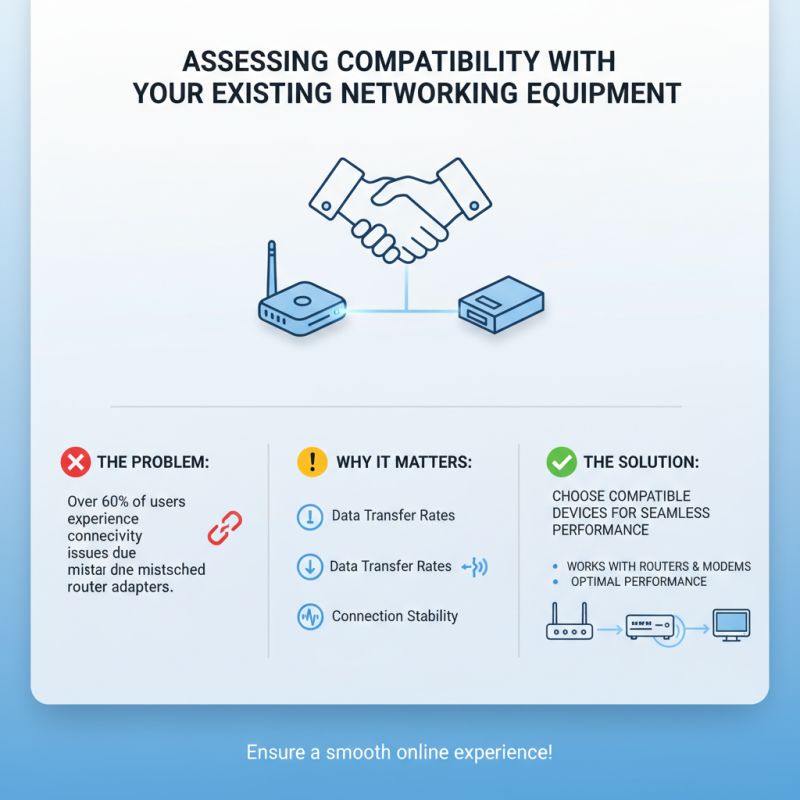
When choosing a router adapter, compatibility with existing equipment is crucial. Research shows that over 60% of consumers face connectivity issues due to mismatched devices. Selecting an adapter that works seamlessly with routers and modems ensures optimal performance. Compatibility can impact data transfer rates and connection stability.
Recent industry reports highlight that consumers often overlook specifications. For instance, not all adapters support the latest Wi-Fi standards. Many devices may only function reliably with specific protocols. This lack of attention can lead to frustration and poor internet experience. It's essential to verify compatibility with device models before making a purchase.
Adapters vary in technical capabilities, which may not be clear to all users. Some may fail to support features like dual-band connectivity, which significantly enhances speed and reduces latency. Checking user reviews can provide insights, although they may vary complexity. Relying solely on these reviews is not advisable. Conducting thorough research ensures that your new adapter matches the specifications of your networking setup.
Evaluating Performance Metrics: Speed, Range, and Reliability
When selecting a router adapter, evaluating performance metrics is crucial. Speed is often prioritized. According to industry reports, a high-quality router can achieve speeds of up to 1,200 Mbps on a dual-band system. However, many household users may not need such high speeds. Understanding your internet usage helps in making informed decisions.
Range is another key metric. The effective range of a router can vary significantly. For instance, routers with a wider coverage can reach up to 2,000 square feet. This is vital for larger homes. Yet, obstacles like walls can diminish the range. Users must assess their home layout before purchasing.
Reliability is intertwined with both speed and range. A report from the Wireless Broadband Alliance shows that around 30% of users experience regular connectivity drops. This can be frustrating, especially during work-from-home situations. Looking for adapters that emphasize signal integrity is an important consideration. Each of these metrics should align with your unique needs for optimal performance.
Budget Considerations: Finding a Router Adapter That Fits Your Needs
When considering a router adapter, budget plays a crucial role. Many users often overlook this factor. The right adapter must align with financial constraints while still providing necessary features. Start by assessing your actual needs. Will you use it for basic browsing, or for gaming and streaming? Each use case has different requirements.
Researching options is vital. Look for user reviews and expert opinions. They can provide insights into performance and durability. However, remember that not all reviews are trustworthy. Find a balance between price and quality. A cheaper adapter might save money initially, but could lead to higher costs later due to poor performance. Be mindful of long-term value.
Consider also hidden costs. Some adapters may require additional accessories or subscriptions. Reflect on these factors before making a choice. You should feel confident in your decision. If in doubt, seek advice from knowledgeable sources, but trust your instincts too. Making the right choice involves careful thought and evaluation.