How to Choose the Best Ethernet Router for Your Home Network Needs
When it comes to establishing a reliable home network, choosing the right Ethernet router is paramount. As technology continues to advance, the demands on our home networks have increased significantly. Network expert Dr. Emily Rogers, a prominent voice in home networking solutions, emphasizes, "The quality of your Ethernet router can make or break your home internet experience." This statement highlights the critical role that an Ethernet router plays in ensuring stable and fast internet connectivity for various devices in today's smart homes.
In selecting the best Ethernet router for your needs, several key factors must be considered, including speed, range, security features, and ease of setup. Understanding these elements will empower consumers to make informed decisions tailored to their specific requirements. Moreover, as the home environment becomes increasingly dependent on seamless connectivity for work, entertainment, and communication, the significance of a robust Ethernet router cannot be overstated. By evaluating these important aspects, individuals can enhance their home networking experience and ensure they are well-equipped for the challenges of modern internet usage.

Understanding Ethernet Routers and Their Importance in Home Networking
Understanding the role of Ethernet routers is crucial in optimizing home networking. An Ethernet router serves as the central hub connecting multiple devices within a home, allowing them to communicate with each other and access the internet. Unlike wireless routers, Ethernet routers provide a wired connection directly to devices, ensuring a more stable and reliable connection. This is particularly essential for activities that require high bandwidth, such as online gaming, video streaming, and large file transfers.
Choosing the right Ethernet router can significantly impact your home networking experience. Consider factors such as the number of devices that will connect to the network, the speeds they require, and the layout of your home. For larger homes or those with many devices, a router with advanced features like Quality of Service (QoS) and multiple Ethernet ports will ensure optimal performance. Additionally, understanding the importance of Ethernet cables and their categories can further enhance network speed and reliability. Investing in a suitable Ethernet router tailored to these needs makes home connectivity seamless and efficient.
Key Features to Consider When Choosing an Ethernet Router
When selecting the best Ethernet router for your home network, several key features must be considered to ensure you meet your specific connectivity needs. First and foremost, assess the speed capabilities of the router. Look for models that support the latest Ethernet standards, such as 802.11ac or even 802.11ax, to provide faster data transfer rates. Additionally, analyze the number of ports available; more ports allow for connecting multiple devices directly via Ethernet cables, which can enhance performance and reduce latency.
Another vital feature is the router's range and signal strength. Evaluate whether the router offers advanced technologies like beamforming or MU-MIMO, which improve signal distribution and usability for multiple devices simultaneously. Security features should also be a priority; look for routers that support the latest encryption standards, such as WPA3, to protect your network from unauthorized access. Lastly, consider user-friendly management options; some routers offer mobile apps or web interfaces that make it easier to manage settings and monitor network performance, providing peace of mind and enhanced control over your home network.
How to Choose the Best Ethernet Router for Your Home Network Needs - Key Features to Consider When Choosing an Ethernet Router
| Feature |
Description |
Importance |
| Speed |
Measured in Mbps, this indicates how fast data can be transmitted over the network. |
High speed is crucial for activities like gaming and streaming. |
| Number of Ports |
The number of Ethernet ports available for wired connections. |
More ports allow for more devices to connect directly and reduce latency. |
| Wireless Standards |
Includes 802.11ac, 802.11ax, etc., which determine the performance of Wi-Fi. |
Higher standards offer better speed and range. |
| Range |
The distance over which the router can effectively transmit a signal. |
A wider range provides connectivity throughout the home. |
| Security Features |
Includes protocols like WPA3 for protecting your network. |
Essential for safeguarding personal information from unauthorized access. |
| Quality of Service (QoS) |
Prioritizes bandwidth allocation for specific applications. |
Helps maintain performance for high-priority uses like streaming and gaming. |
| Price |
Cost range for the router, impacting the choice based on budget. |
Finding a balance between cost and needed features is key. |
Assessing Your Home Network Needs and Usage Scenarios
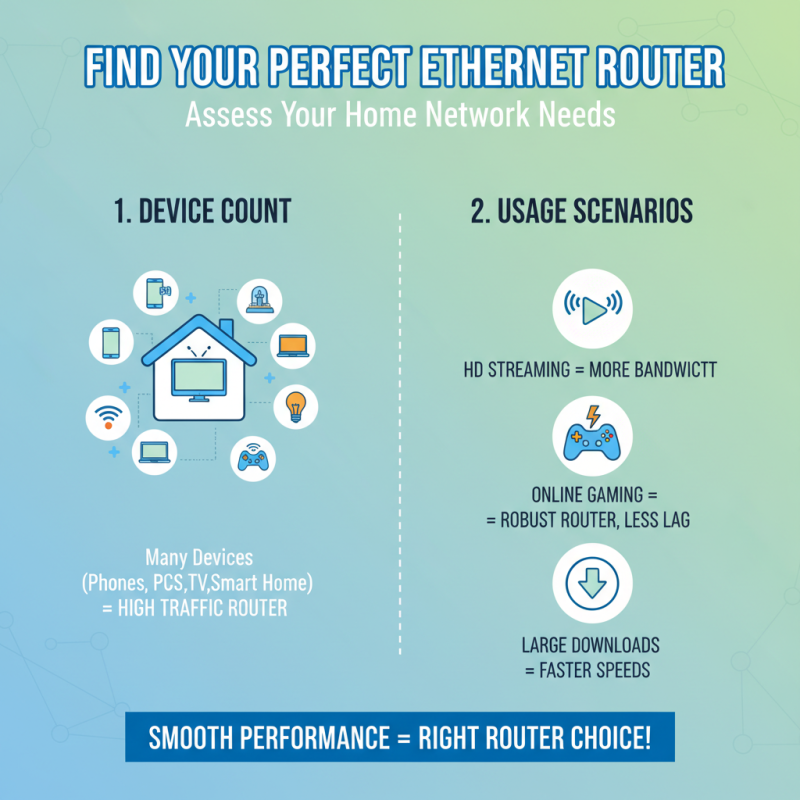
When choosing the best Ethernet router for your home, the first step is to assess your specific network needs and usage scenarios. Begin by evaluating the number of devices that will connect to the router. A household with multiple smartphones, laptops, smart TVs, and IoT devices requires a router that can handle high traffic simultaneously. Consider the activities conducted on these devices; for example, streaming high-definition videos or online gaming demands more bandwidth and a robust router to avoid lag and buffering.
Another important factor is the size and layout of your home. Larger homes or those with multiple floors might require a router with extended range or possibly a mesh network to ensure that coverage is consistent in every corner. Additionally, think about your internet service plan—your router should be capable of accommodating the maximum speeds provided by your ISP to fully utilize your subscription. By understanding your household’s usage patterns and spatial requirements, you can make an informed choice that ensures efficient and reliable connectivity for all your networked devices.
Comparing Ethernet Router Types and Specifications
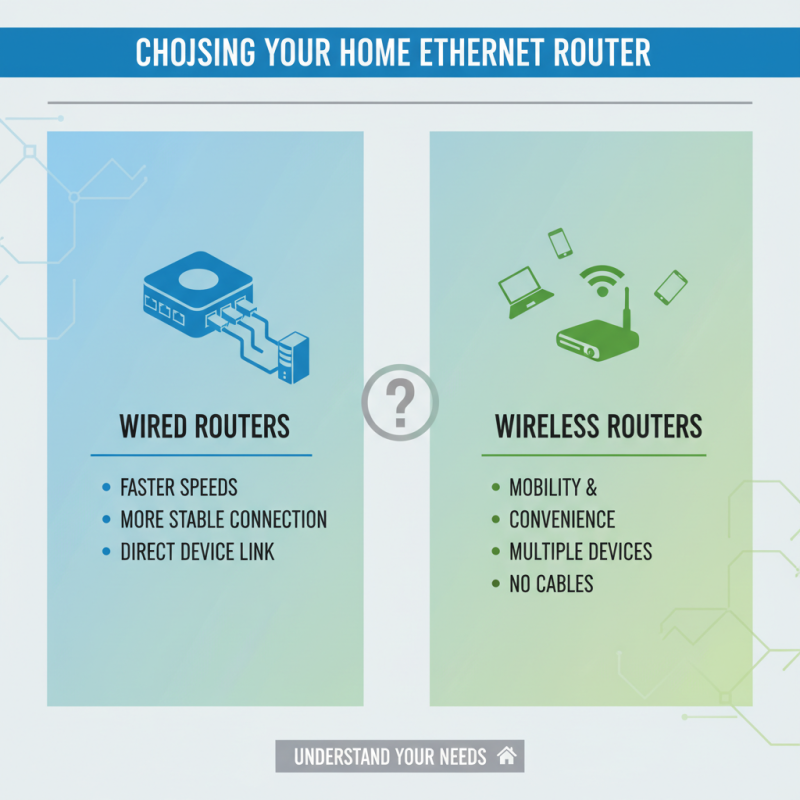
When it comes to selecting the best Ethernet router for your home network, understanding the different types and their specifications is crucial. Generally, routers can be categorized into wired and wireless models, with wired routers typically providing faster and more stable connections due to their direct connection to devices. In contrast, wireless routers offer the convenience of mobility, supporting multiple devices without the hassle of cables.
When comparing specifications, pay close attention to bandwidth capacity, which is often measured in megabits per second (Mbps). A higher Mbps means faster data transfer speeds, allowing seamless streaming, gaming, and web browsing. Additionally, consider the number of ports; models with more Ethernet ports provide versatility in connecting multiple devices directly, which can enhance network performance, especially for households with numerous gadgets.
Tip: Always think about your current and future internet usage when selecting a router. If you plan to expand your home network or incorporate smart home devices, opt for a router that supports higher speeds and more connections. Also, investing in routers that support the latest Ethernet standards can ensure your network remains efficient and future-proof.
Setting Up and Optimizing Your Ethernet Router for Best Performance
Setting up your Ethernet router is crucial for optimizing your home network performance. Begin by placing your router in a central location, away from walls, metal objects, and other electronic devices that may cause interference. This positioning ensures a strong signal that reaches all corners of your home. Once the physical setup is complete, connecting your devices via Ethernet cables can significantly enhance speed and reliability compared to wireless connections, especially for high-bandwidth activities like gaming and streaming.
After the initial setup, it’s essential to access the router’s configuration interface to make necessary adjustments. Change default login credentials to strengthen security and regularly update the router’s firmware to protect against vulnerabilities. Additionally, consider configuring Quality of Service (QoS) settings to prioritize bandwidth for specific applications, ensuring smooth performance even when multiple devices are connected. Regularly monitoring your network performance can also help identify any bottlenecks or areas that require improvement, ensuring that your home network operates at its best.
Ethernet Router Performance Comparison