How to Choose the Right Data Center Server for Your Needs?
Choosing the right Data Center Server is crucial for your business’s success. The server is the backbone of your IT infrastructure. A poorly chosen server can lead to data loss and inefficient operations.
Understanding your specific needs is key. For instance, a small business may need a compact server. In contrast, larger enterprises may require powerful, scalable options. Evaluating performance, capacity, and energy efficiency will help ensure you make a wise decision.
At times, the abundance of options can be overwhelming. Rushing the decision might lead to long-term repercussions. Seek advice from experts if unsure. Balancing cost with performance is essential. A reliable Data Center Server can provide the necessary support, aiding growth while minimizing risks.
Understanding Your Business Needs for Data Center Servers
When selecting a data center server, understanding your business needs is crucial. According to a recent report by Research and Markets, over 60% of organizations prioritize performance and scalability. Your server must handle peak workloads efficiently. Assessing your current and future business demands is essential.
Consider workload requirements. If your applications are data-intensive, opt for servers designed for high performance and quick data access. In contrast, lighter workloads may not need the same level of hardware.
Additionally, a survey by Gartner shows that 45% of businesses face challenges in scalability. This indicates a need for servers that can adapt as your business grows.
Don’t overlook budget constraints. While investing in high-quality servers is important, excessive spending can lead to waste. Regular evaluation of server performance can highlight inefficiencies. Reflecting on potential savings may lead to more informed decisions. Consider the total cost of ownership, not just initial expenses. This comprehensive approach can lead to more successful outcomes.
Evaluating Different Types of Server Architectures
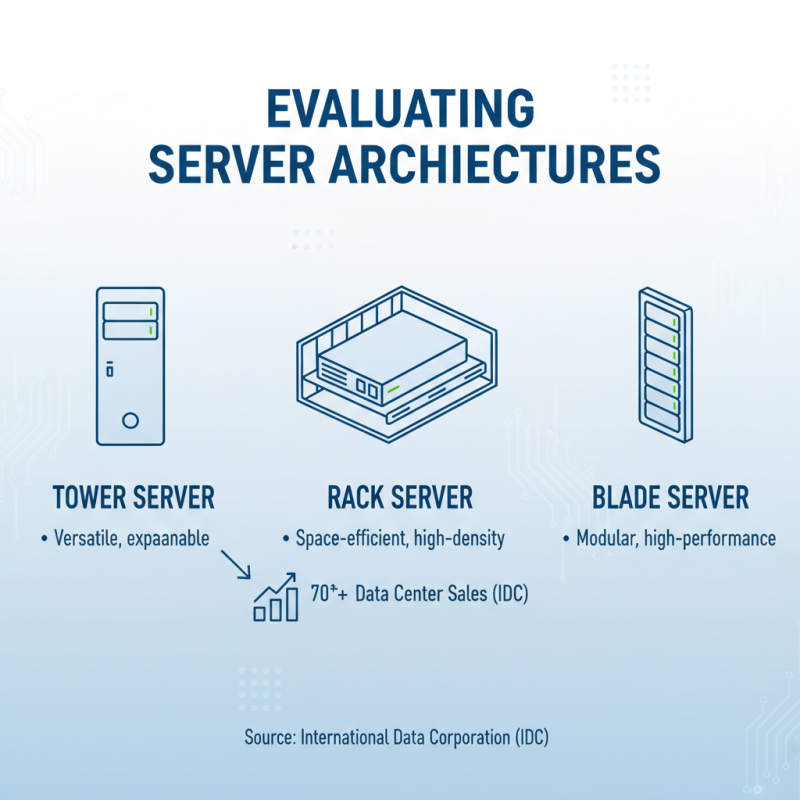
When choosing a data center server, understanding different server architectures is crucial. There are primarily three types: tower, rack, and blade servers. Each serves unique needs. For instance, rack servers are ideal for organizations with limited space, as they offer high-density computing. According to a recent report by the International Data Corporation (IDC), rack servers represent over 70% of data center sales, emphasizing their popularity.
Blade servers, on the other hand, focus on maximizing performance and resources. They allow multiple server blades to fit into a single chassis, reducing power consumption and cooling requirements. A study from Gartner noted that blade server sales are increasing by approximately 15% annually, showcasing their growing relevance for resource-demanding applications. However, they can be more complex to manage and may incur higher initial costs.
It's essential to evaluate your organization's current and future needs before making a decision. If the workload is unpredictable, a more flexible architecture could be advantageous. Additionally, considering power redundancy and scalability options can help avoid potential pitfalls. A strategic approach can yield significant benefits in operational efficiency and cost savings over time.
Assessing Performance and Scalability Requirements
When selecting a data center server, performance and scalability are crucial factors. You need to understand your current workload and future demands. A server's processor speed, memory capacity, and storage type significantly impact performance. For instance, applications requiring heavy data processing will benefit from higher CPU counts and fast RAM. It's essential to evaluate how these components interact as system bottlenecks can arise from mismatched resources.
Scalability is just as important. A server must adapt to your business growth. Consider how easily it can integrate additional storage or processing power. Adding more resources shouldn't disrupt your operations. Look for design features that support expansion without major overhauls. Reflect on your current needs and future projects. Having a flexible setup can save costs in the long run.
An effective balance between performance and scalability is essential. You may not always foresee future requirements accurately. Prioritizing certain features might lead to overlooking others. Regularly reassess these factors to ensure your server can meet evolving demands. Creating a robust strategy now will pay dividends later on.
Analyzing Cost-Effectiveness and Budget Constraints
When selecting a data center server, cost-effectiveness is key. Often, organizations face tight budget constraints. Understanding your budget is the first step. Analyze all potential expenses, including upfront costs and ongoing maintenance. Look beyond the sticker price. Some servers may offer better energy efficiency, reducing ongoing costs in the long run.
Consider scalability as well. A server that meets current needs might become a burden if it can't grow with your organization. You may end up needing additional servers sooner than expected. This can create unexpected costs. It's crucial to project future needs accurately.
Evaluate your options based on total cost of ownership (TCO). TCO goes beyond initial purchase costs to encompass all associated expenses. This approach provides a clearer picture of affordability. Sometimes, investing more upfront can lead to long-term savings. That said, not every high-cost option is the best. Balancing performance and price is vital. Seek reliable advice, and be ready to reassess your choices based on evolving technology. Make decisions carefully; every dollar counts.
Considering Future Growth and Technology Trends
When choosing a data center server, consider future growth and technology trends. Businesses today require flexibility. You need a server that aligns with your company’s evolving needs. Scalability is key. Evaluate your current workload and project future demands. This foresight will guide your choices.
**Tips:** Look for systems with modular designs. They can expand easily as you grow. Pay attention to future technology trends, like cloud computing and AI advancements. These play a crucial role in how you scale your infrastructure. A server that accommodates these technologies can save costs down the road.
Security is also vital. As technology evolves, so do threats. Ensure the server has robust security features. Evaluate its compliance with current regulations. It’s worth reflecting on your past experiences. Ask if previous decisions met your growth needs. Crafting a strategy around these elements will help you make informed decisions.
Data Center Server Types and Their Popularity