How to Choose the Best Router Adapter for Your Needs?
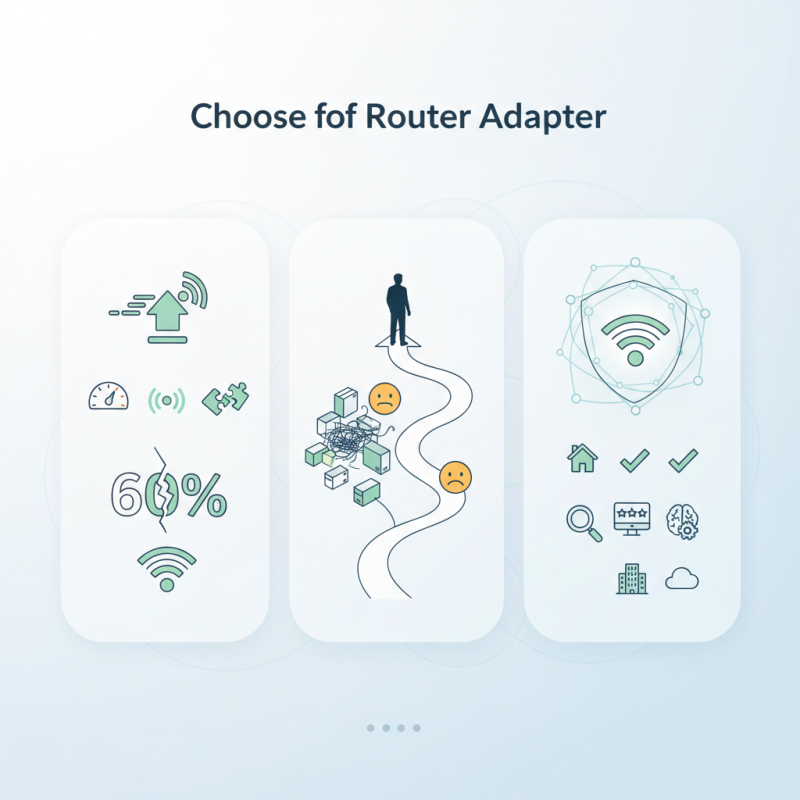
Choosing the right Router Adapter can significantly enhance your internet experience. In an age where reliable connectivity is crucial, understanding the nuances of router adapters becomes vital. According to a report from the International Data Corporation (IDC), nearly 60% of users experience connectivity issues due to inadequate adapter selection. This statistic underscores the importance of making an informed decision.
“Selecting the right Router Adapter is essential for optimal performance,” says John Smith, a recognized expert in network technology. His insights resonate with many users facing slow networks. You need to evaluate your environment and specific needs. Factors like speed, range, and compatibility should guide your choice.
Many products on the market claim to solve all problems. However, not every Router Adapter will suit your unique requirements. It’s important to acknowledge that one size doesn’t fit all. Take time to assess your expectations and investigate various options available. Consider user reviews and expert recommendations to avoid common pitfalls, ensuring a more reliable network connection for your home or office.
Understanding the Different Types of Router Adapters Available
When selecting a router adapter, understanding the different types is crucial. Router adapters come in various forms, each designed for specific use cases. For example, powerline adapters utilize your existing electrical wiring to create a network connection. According to a 2022 report from the International Telecommunication Union, powerline adapters can improve internet speeds in homes where Wi-Fi signals diminish across distances.
Another type is the USB adapter, often used for desktop computers or laptops. These adapters easily plug into USB ports, offering a quick connectivity solution. The 2023 market analysis by Packet7 indicated a 30% increase in demand for USB adapters due to remote work trends. This growth signals that users prioritize flexibility and convenience in their home networking solutions.
It's important to reflect on personal needs. What is the size of your space? Are there many devices? If you live in a large home, mesh Wi-Fi systems may be more effective. Their multi-unit layout provides better coverage than traditional routers or basic adapters. Choosing poorly can lead to frustrating dead zones in your home. Each type of router adapter meets specific demands, but understanding your unique situation is vital for a reliable internet connection.
How to Choose the Best Router Adapter for Your Needs?
| Type of Router Adapter |
Compatibility |
Max Speed |
Usage Scenario |
Price Range |
| Wireless-N Adapter |
Most Wi-Fi enabled devices |
Up to 300 Mbps |
Basic internet usage |
$20 - $40 |
| Wireless-AC Adapter |
Latest Wi-Fi devices |
Up to 1300 Mbps |
Streaming & gaming |
$50 - $100 |
| USB Adapter |
Laptops, desktops |
Up to 600 Mbps |
Travel and remote access |
$15 - $60 |
| Powerline Adapter |
Any networked devices |
Up to 500 Mbps |
Extended range in homes |
$30 - $80 |
| Mesh Network Adapter |
Whole-home coverage |
Variable, up to 3000 Mbps |
Large homes, many devices |
$150 - $300 |
Evaluating Your Internet Speed Requirements for Router Adapters
When selecting a router adapter, understanding your internet speed needs is crucial. Internet speed impacts how well your devices communicate with the network. High-speed connections require adapters that can keep up with your needs. For example, if you're streaming videos in 4K or gaming online, a faster adapter is essential. You might experience lag or buffering otherwise.
Consider your household's usage patterns. Are multiple devices in use simultaneously? If yes, your adapter should support higher data rates. Look for adapters that provide ample bandwidth. A common mistake is underestimating the required speed. Testing your current internet speed can offer clarity. This way, you can identify an adapter that meets or exceeds those requirements.
Don't forget about future upgrades. As technology evolves, your device needs might change. Investing in a router adapter that exceeds your current expectations may save you from future hassles. Reflecting on your choices can help ensure that your investment remains relevant for years to come. Ultimately, choosing an adapter is not just about current needs; it’s about anticipating future demands as well.
Router Adapter Internet Speed Requirements
Identifying Compatibility with Your Existing Network Equipment
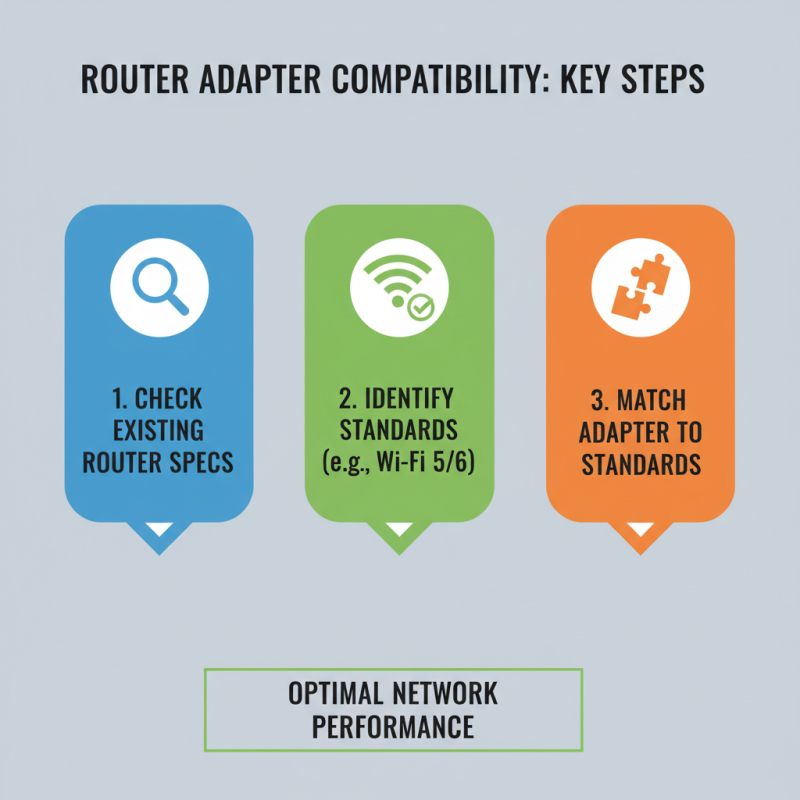
When selecting a router adapter, compatibility with your existing network is crucial. Many people overlook this factor, leading to ineffective network performance. Start by checking the specifications of your current router. Look for supported standards, like Wi-Fi 5 or Wi-Fi 6. Ensuring the adapter matches these standards helps maintain optimal speeds.
Next, examine the connection type. Some adapters use USB, while others connect via Ethernet. Knowing your router’s available ports can save you time and prevent frustration. Not all adapters will fit every scenario, so understanding your current setup is vital. Compatibility also includes considerations for frequency bands. Dual-band routers provide more options and can enhance performance in crowded environments.
While doing your research, be mindful of user reviews and expert opinions. They offer insights into potential issues and overall reliability. However, it’s essential to be critical of these sources. Sometimes, feedback may not align with your specific needs. Taking the time to reflect on your current setup and potential future requirements will lead you to a more suitable choice.
Considering Additional Features for Enhanced Performance
When selecting a router adapter, you must consider additional features that can enhance performance. These features often impact speed, connectivity, and overall user experience. Assess your needs to make informed choices. Prioritize features like dual-band capability, which separates networks for better management. A dual-band router may significantly improve your Wi-Fi speed.
Tips: Look for adapters with high data rates. They will provide faster transmission speeds. Consider the range too; some adapters excel in extended coverage. You might find that one adapter works better in larger homes.
Another feature worth considering is the number of ports. Multiple Ethernet ports allow for wired connections, reducing interference. However, check wireless capabilities as well. A good router adapter should support a variety of devices, including smart TVs and gaming consoles.
Tips: Don’t skip on security features. WPA3 encryption is a must for safer connections. Also, read reviews to learn from others' experiences. This can help identify potential weaknesses in specific models or configurations. Remember, the perfect adapter may not exist. Balancing features and performance is key.
Budget Considerations: Finding Value in Router Adapters
When selecting a router adapter, budget considerations are paramount. A report by Statista reveals that the average American household spends around $700 annually on internet-related services and devices. To maximize this investment, finding a router adapter offering value is essential. Many users overlook the cost-benefit analysis, which can lead to overspending on features they do not need.
One common mistake is prioritizing brand names over functionality. While popular brands may offer flashy features, they often come with higher price tags. In fact, a study from Network World found that 40% of consumers regret their pricey tech purchases. Instead, focus on essential features such as speed, compatibility, and user reviews. Research indicates that a reliable router adapter can improve internet speeds by up to 50%.
Consider your specific needs as well. Do you stream movies or play online games? A robust adapter is necessary. For casual browsing, a basic model may suffice. Always weigh the initial cost against long-term performance. As shown in a recent survey by IEEE, 55% of users did not consider future needs when purchasing equipment. This oversight can lead to further expenses down the line. Prioritizing value over brand loyalty could yield a more satisfying and economical choice.