How to Choose the Best Ethernet Router for Your Home Network Needs
In today's fast-paced digital world, having a reliable home network is essential to support the myriad of devices connected to the internet. With the growing reliance on streaming services, online gaming, and remote work, the demand for a robust Ethernet Router has surged. According to a recent report by the International Telecommunications Union, nearly 60% of households now rely on wired connections to enhance their internet performance, showcasing the critical role of Ethernet Routers in modern networking.
James Parker, a networking expert and author of "Networking Essentials," emphasizes the significance of choosing the right Ethernet Router, stating, "A well-chosen Ethernet Router not only maximizes your internet speed but also provides a stable connection for multiple users and devices." The right router can make a considerable difference in the quality of your online experiences, from lag-free gaming to uninterrupted video calls.
With countless options available in the market, navigating the selection process can be daunting. Understanding your specific needs—such as speed requirements, range, and device compatibility—will help you make an informed decision. This guide aims to equip you with the knowledge necessary to select the best Ethernet Router tailored to your home network needs.
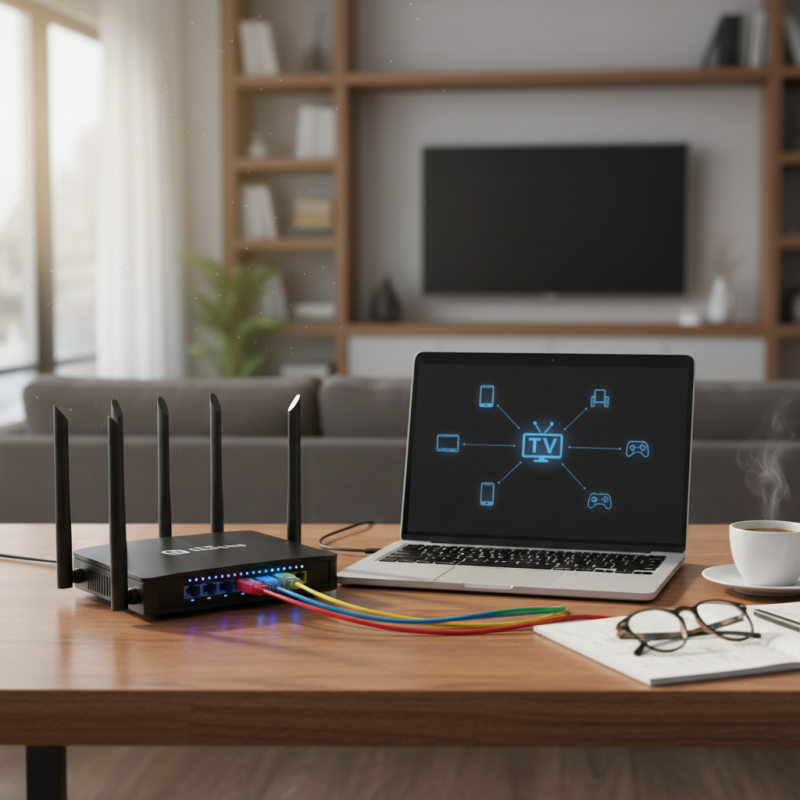
Understanding Your Home Network Requirements
Understanding your home network requirements is crucial when selecting the best Ethernet router. Start by assessing the number of devices that will connect to your network. Consider not just computers and smartphones, but also smart TVs, gaming consoles, and other IoT devices. A larger household with multiple users will demand greater bandwidth, while a smaller home might require less. Identifying your usage patterns, such as streaming, gaming, or video conferencing, will also help in determining the specifications you'll need in a router.
Tips: Make a list of all devices that will connect to your network and categorize them based on their bandwidth needs. For example, streaming services typically require more data compared to browsing or emailing. This will assist you in making an informed decision when researching router capabilities.
Another vital aspect is the layout of your home. The size and structure of your space can significantly affect Wi-Fi signal strength. If you live in a multi-level home or an area with thick walls, you may need a router with extended coverage or consider mesh systems for optimal performance.
Tips: Use a Wi-Fi signal testing app to measure the strength of your current network in different areas of your home. This can provide insights into where you may need more coverage or whether a more powerful router is necessary. Ensure you also think about future needs, as technology continues to evolve.
Key Features to Look for in an Ethernet Router
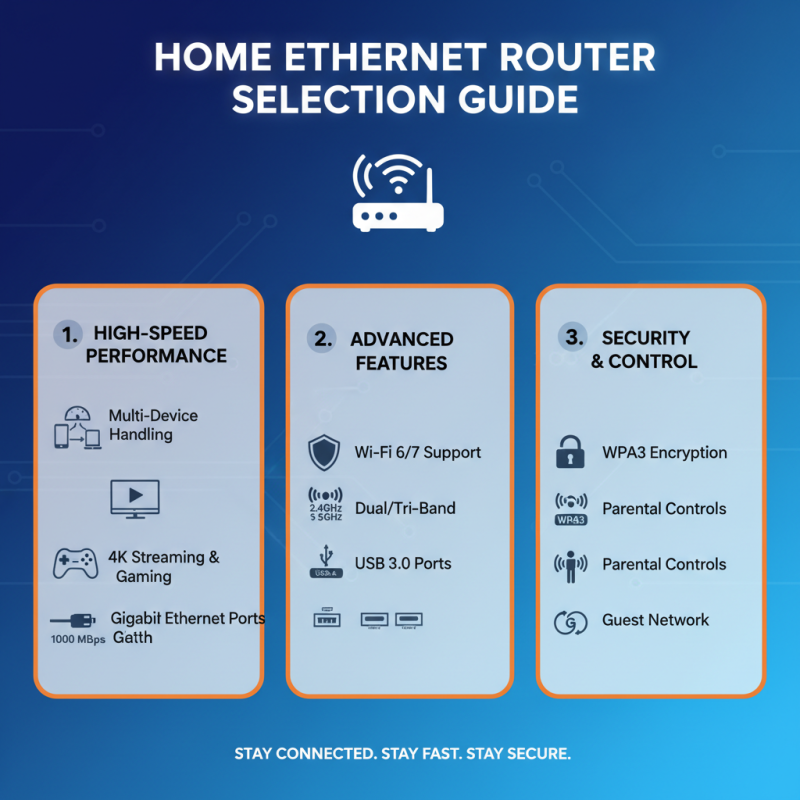
When selecting an Ethernet router for your home network, there are several key features to consider. First and foremost, look for a router that offers high-speed performance. This is essential for handling multiple devices simultaneously, especially if you stream videos, play online games, or engage in heavy internet usage. A router with a gigabit Ethernet port will ensure that your wired connections can take full advantage of high-speed internet plans, providing stable and fast connections.
Additionally, consider the number of Ethernet ports available on the router. Depending on your home network setup, you may need multiple wired connections for devices such as computers, gaming consoles, and smart TVs. A router with several gigabit ports can easily accommodate these needs, enhancing your overall network efficiency. Furthermore, features such as Quality of Service (QoS) settings can prioritize bandwidth for specific devices or applications, ensuring a smoother experience during high-demand activities.
Lastly, security features are critical when selecting an Ethernet router. Look for routers that support the latest security protocols, such as WPA3, to protect your home network from unauthorized access. Built-in firewalls and security settings that can be easily managed are also important for safeguarding against potential threats. With these features in mind, you can choose an Ethernet router that effectively meets your home networking needs while providing reliable performance and security.
Evaluating Speed and Performance Metrics
When choosing an Ethernet router for your home, evaluating speed and performance metrics is crucial to ensure efficient network usage. One of the primary speed metrics to consider is the maximum throughput, which indicates how much data the router can handle at once. This is generally measured in megabits per second (Mbps) and should align with your internet plan. For households with multiple devices streaming or gaming simultaneously, opting for a router with a higher throughput can significantly enhance the overall user experience by minimizing lag and buffering.
Another important performance metric is latency, which refers to the delay before a transfer of data begins following an instruction. Low latency is essential for activities like online gaming and video conferencing, where real-time interaction is necessary. Additionally, considering the router’s Quality of Service (QoS) features can also impact performance. QoS settings allow you to prioritize bandwidth to specific devices or applications, ensuring that high-demand tasks receive adequate resources, even in busy networks. By focusing on these speed and performance metrics, you can select a router that meets your specific home networking needs efficiently.
How to Choose the Best Ethernet Router for Your Home Network Needs - Evaluating Speed and Performance Metrics
| Router Model |
Maximum Speed (Mbps) |
Number of Ports |
Wi-Fi Standards Supported |
Best Use Case |
| Ethernet Router A |
1000 |
4 |
802.11ac, 802.11n |
Gaming and Streaming |
| Ethernet Router B |
500 |
8 |
802.11n |
Basic Home Use |
| Ethernet Router C |
2400 |
6 |
802.11ax, 802.11ac |
High-Performance Tasks |
| Ethernet Router D |
1200 |
4 |
802.11ac |
Streaming and Video Calls |
| Ethernet Router E |
1000 |
5 |
802.11ax |
Smart Homes and IoT Devices |
Assessing Security Features and Protocols
When selecting the best Ethernet router for your home network, one of the most critical aspects to consider is its security features and protocols. A robust router should support advanced security protocols such as WPA3, which offers enhanced encryption and protection against unauthorized access. This is particularly important as home networks are increasingly targeted by cyber threats, and having updated security measures can significantly reduce the risk of data breaches.
In addition to protocol support, it is essential to evaluate additional security features that the router may offer. Look for options like firewalls, built-in malware protection, and intrusion detection systems, which can provide an extra layer of defense against potential attacks. Some routers also come with parental controls and guest network capabilities, allowing you to manage accessibility while keeping your primary network secured. By assessing these features thoroughly, you can ensure that your home network is protected against evolving security threats while meeting your specific connectivity needs.
Comparison of Ethernet Router Security Features
Comparing Price and Value for Your Budget
When selecting the best Ethernet router for your home, it's essential to weigh
price against value.
Many budget routers may seem appealing due to their lower price tags, but they often compromise on
performance and features.
It’s crucial to assess what you prioritize in your home network, whether it's
speed,
range, or advanced features like
Quality of Service (QoS) or
security settings.
Investing a little more upfront can lead to significant long-term benefits, such as improved
connectivity for multiple devices and better
support for high-bandwidth activities like gaming
and streaming.
Another critical consideration is future-proofing
your network. Technology is continually evolving, and routers that support the latest standards can
provide enhanced capabilities. While these models may have a higher initial cost, they can save you
from needing frequent upgrades. Evaluating a router based on
user reviews and detailed specifications can help
you find a model that aligns with both your budget and your network requirements, ensuring that you
receive the best possible value for your investment.