How to Choose the Best Server Blades for Your Business Needs
In today's rapidly evolving technological landscape, choosing the right Server Blades has become a critical decision for businesses aiming to optimize performance and scalability. According to a recent report by IBISWorld, the server blade market is projected to grow at a compound annual growth rate (CAGR) of 6.3% over the next five years, indicating a rising demand for efficient and powerful server solutions. As enterprises strive to enhance their IT infrastructure, understanding the various options available in server blades is paramount for making informed choices that align with business needs.
Expert in the field, Dr. Laura Jensen, a leading analyst with the Tech Insights Group, emphasizes the importance of this selection process. She states, "Selecting the appropriate Server Blades is not just about current performance; it's about future-proofing your infrastructure to stay competitive in an ever-changing market." This insight underscores the necessity for businesses to consider factors such as blade density, energy efficiency, and compatibility with existing systems when evaluating server blade options. Ultimately, the right choice can empower organizations to unlock increased operational efficiency and drive digital transformation initiatives crucial for modern competitiveness.

Understanding Server Blades: Definition and Key Features
Server blades are compact and efficient computing components designed to fit into a chassis, allowing multiple servers to operate in a single physical footprint. This design not only saves space but also simplifies the management of power, cooling, and connectivity, making server blades an attractive option for businesses looking to optimize their data center resources. Each server blade functions independently, providing a unique combination of processing power, memory, and storage capabilities, which can be tailored to meet specific business needs.
Key features of server blades include their modularity, which allows for easy scalability as a business grows. Organizations can add or remove blades from the chassis without significant downtime, facilitating business continuity. Additionally, server blades typically come equipped with advanced management tools, enabling IT teams to monitor performance, allocate resources, and troubleshoot issues efficiently. Their shared infrastructure for power and cooling also enhances energy efficiency, making server blades a cost-effective solution for businesses that prioritize sustainability while managing their IT workload.
How to Choose the Best Server Blades for Your Business Needs
| Feature |
Description |
Importance Level |
| Processor Type |
Different processors can affect performance, scalability, and energy efficiency. |
High |
| Memory Capacity |
Amount of RAM available influences multitasking and application performance. |
High |
| Storage Options |
Types of storage (HDD vs SSD) affect speed, accessibility, and durability. |
Medium |
| Network Connectivity |
Networking options determine data transfer rates and reliability. |
High |
| Form Factor |
Physical dimensions can affect the deployment in existing infrastructures. |
Medium |
| Power Efficiency |
Power consumption impacts operational costs and environmental footprint. |
High |
| Management Features |
Built-in management tools simplify monitoring and maintenance. |
Medium |
Assessing Business Requirements for Server Blade Selection
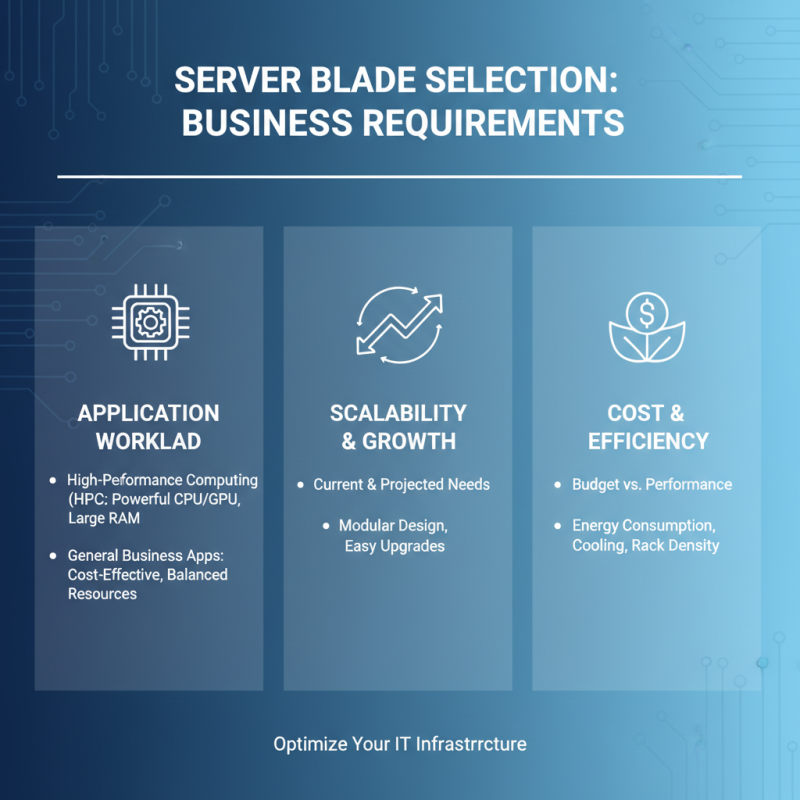
When assessing business requirements for server blade selection, it's crucial to first understand the specific needs and objectives of your organization. Begin by evaluating the types of applications your business relies on, as different workloads can greatly influence the server blade capabilities you require. For instance, high-performance computing tasks may necessitate blades with powerful processors and ample memory, whereas less demanding applications could function adequately with more cost-effective options. Additionally, consider your current and projected growth; selecting server blades that can scale with your business will ensure sustainability in your IT infrastructure.
Another key factor to assess is the operational environment in which these server blades will be deployed. Factors such as power consumption, cooling requirements, and physical space in your data center can significantly impact your choice. It's also important to evaluate the potential for redundancy and reliability, as downtime can be costly for any organization. Finally, ensure that the selected server blades can integrate smoothly with your existing technology stack and are compatible with your management tools. A thorough understanding of these needs will guide you in choosing the most effective server blades that align with your business objectives.
Comparing Performance Metrics of Different Server Blades
When selecting server blades for your business, understanding performance metrics is crucial. Server blades come with varying specifications that impact their efficiency and speed. Key metrics to evaluate include processing power, memory capacity, and storage options. CPUs with higher core counts can handle more simultaneous operations, while systems with ample RAM facilitate better multitasking. Additionally, consider the type and speed of storage media; solid-state drives (SSDs) typically offer faster data access than traditional hard disk drives (HDDs), significantly boosting overall performance.
Tip: Always align your performance needs with the specific workloads your business runs. For instance, if you're managing databases or high-demand applications, prioritize blades with superior processing capabilities and memory throughput.
Another important aspect is power consumption, as it can affect overall operational costs. Look for blades that offer energy efficiency without compromising performance. Performance per watt is a critical metric; blades that provide high output for lower energy usage can lead to substantial savings over time.
Tip: Regularly monitor the performance metrics of your server blades. This not only helps in identifying bottlenecks but also assists in making informed decisions for future upgrades or replacements. Choose blades that not only meet your current needs but also have the capability to evolve as your business grows.
Evaluating Cost Implications and Budgeting for Server Blades
When evaluating cost implications and budgeting for server blades, it is essential to consider the
total cost of ownership (TCO)
rather than just the initial purchase price. According to a recent industry report by Gartner, the TCO of server blades
can be significantly lower than traditional rack servers due to reduced power consumption and cooling requirements.
Enterprises adopting energy-efficient server blades can see power savings of up to 30%,
allowing for a more favorable long-term financial outcome.
Tip: When assessing options, be sure to include not only the upfront cost but also ongoing operational expenses in your
calculations. For instance, evaluating projected energy costs and potential maintenance expenses can provide a clearer picture
of which server blades will offer the best return on investment over time.
Additionally, it is crucial to align your budget with your business's growth and scalability needs. IDC reports that many businesses
underestimate future computing demands, which can lead to costly upgrades down the line. By investing in server blades that offer
modular options, organizations can avoid overcommitment and ensure that their infrastructure adapts to evolving requirements
without incurring significant additional costs.
Tip: Consider implementing a phased investment strategy, allowing your organization to gradually scale up and optimize its
infrastructure based on actual usage rather than anticipated growth. This approach not only mitigates risks but also empowers
informed decision-making as your business evolves.
Choosing Complementary Hardware and Software for Optimal Performance
When selecting server blades for your business, it's essential to consider the complementary hardware and software that can amplify their performance. A well-integrated setup can significantly enhance efficiency and provide a competitive edge. Start by evaluating your current infrastructure and identifying any existing hardware that could work seamlessly with the new server blades. For instance, ensuring that your storage solutions, networking equipment, and cooling systems are compatible can reduce potential bottlenecks and enhance overall functionality.
In addition to hardware, the choice of software plays a crucial role in optimizing performance. Implementing management and monitoring tools tailored to your server environment can help streamline operations and reduce downtime. Consider virtualization software that maximizes the capabilities of your server blades, allowing for better resource allocation and scalability. Furthermore, make sure to assess your software licensing options, ensuring they align with your long-term business strategy while supporting the applications essential for your operations. By aligning both hardware and software, businesses can achieve a harmonious ecosystem that supports growth and innovation.