Best Server GPU Cards for High Performance Computing?
In the rapidly evolving world of high performance computing, the choice of Server GPU Cards is crucial. Industry reports, such as the one by Mordor Intelligence, suggest that the market for these cards is expected to reach $28 billion by 2026. This surge is driven by increasing demands for artificial intelligence and deep learning applications.
Dr. Emily Chen, a leading expert in GPU technology, emphasizes, “Server GPU Cards will redefine the capabilities of computing clusters.” As companies seek higher computational power, selecting the right GPU can dramatically impact performance outcomes. The diversity of options, however, can lead to confusion. Brands and models vary significantly in terms of architecture, power consumption, and performance capabilities.
What was once a straightforward decision has become increasingly complex. Many users overlook critical specifications, focusing instead on brand names or initial price. A deeper understanding is needed to navigate this landscape effectively. Understanding these nuances is vital in making informed decisions about Server GPU Cards in today's competitive environment.

Exploring the Importance of GPU Cards in High Performance Computing
In high performance computing (HPC), GPU cards play a crucial role. They enhance processing power significantly, enabling faster computations. HPC workloads often involve complex calculations and data analysis. Here, GPU acceleration can make a major difference. Many applications benefit from this boost, including simulations and deep learning.
Tips: When choosing a GPU card, consider memory bandwidth. Opt for higher bandwidth for more efficient data handling. Additionally, check for compatibility with existing hardware. Not all systems can support every GPU.
It’s essential to understand workload requirements. Some tasks may need more graphical power, while others focus on floating-point calculations. Assessing specific needs is key. Not all GPUs fit every scenario perfectly. This can lead to resource underutilization or bottlenecks in performance. Investing time in research thus becomes vital.
Best Server GPU Cards for High Performance Computing
Key Features to Consider When Selecting Server GPU Cards
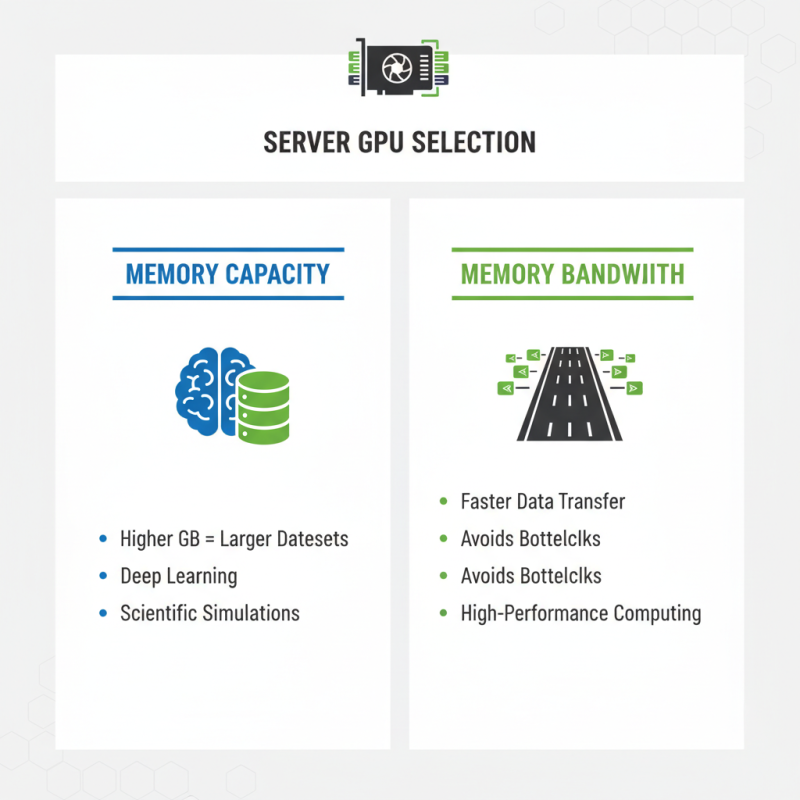
When selecting server GPU cards for high performance computing, several key features stand out. First, consider the memory capacity. A higher memory allows for the handling of larger datasets. This aspect is crucial in applications like deep learning or scientific simulations. Memory bandwidth also plays a vital role. It determines how quickly data can be transferred to and from the GPU. Insufficient bandwidth can lead to bottlenecks.
Another important feature is processing power. Look at the number of cores in the GPU. More cores generally imply better parallel processing capabilities. This characteristic is vital for tasks requiring heavy computations. Additionally, consider power consumption. While high performance is important, energy efficiency should not be overlooked. Inefficient GPUs can lead to increased operational costs over time.
Cooling solutions are another factor to ponder. GPUs generate considerable heat during operations. An effective cooling system is essential to maintain performance. Sometimes, overlooked features can make a significant difference. Reliability is key; a card that breaks down frequently disrupts workflow and productivity. It's important to weigh these features against current and future workload needs. Choose wisely, as the right GPU can shape performance and efficiency.
Top GPU Cards for Machine Learning and Data Analysis
In the world of machine learning and data analysis, choosing the right GPU card is critical. GPU cards significantly accelerate training times for deep learning models, which rely on intensive computations. According to a 2022 industry report, GPUs are pivotal in reducing model training times by 30-50%. This performance leap directly affects project timelines and efficiency.
Popular choices include models that offer high memory bandwidth and increased parallel processing capabilities. For instance, modern GPUs feature up to 40 GB of memory, allowing them to handle large datasets and complex algorithms more effectively. Many researchers highlight that utilizing sufficient memory can enhance model accuracy. But it’s important to note that more powerful GPUs also come with higher energy consumption and costs.
An overlooked aspect is the compatibility of GPUs with existing infrastructure. Some teams face bottlenecks due to inadequate power supplies or cooling systems. While high-performance GPUs may promise speed, the surrounding setup can hinder effectiveness. Organizations should weigh the benefits against potential hidden costs. An ideal choice is not always the most expensive one, but the one that aligns with specific project needs and resources.
Best Server GPU Cards for High Performance Computing
| GPU Model |
CUDA Cores |
VRAM (GB) |
Memory Type |
TDP (W) |
Applications |
| Model A |
5120 |
24 |
GDDR6 |
300 |
Machine Learning, Data Analysis |
| Model B |
3840 |
16 |
GDDR6 |
200 |
Deep Learning, Data Visualization |
| Model C |
3584 |
8 |
GDDR6 |
150 |
Machine Learning, AI Training |
| Model D |
2304 |
12 |
GDDR6 |
170 |
Data Analysis, Computational Tasks |
Comparison of Popular Server GPU Models for HPC Applications
In the realm of high-performance computing (HPC), selecting the right server GPU is critical. Recent industry reports show that GPU-accelerated systems can provide speed increases of up to 100 times for specific workloads. This is especially significant in fields like scientific simulations, artificial intelligence, and big data analytics. Organizations are increasingly investing in GPUs designed for parallel processing.
Popular models often vary in core count, memory bandwidth, and thermal efficiency. For instance, GPUs with a high number of CUDA cores can handle more threads simultaneously, leading to better performance. Reports indicate that memory bandwidth greatly influences data handling capabilities. In some cases, systems with higher memory throughput experience improved computational performance. However, power consumption remains a key consideration.
As organizations assess different options, challenges arise. Not every model suits every application. Certain GPUs may excel at specific tasks but fall short in others. Balancing performance and cost-effectiveness can be complex. Additionally, optimal performance is not just about the hardware; software compatibility and optimization also play vital roles. Each selection involves trade-offs that require careful evaluation of project needs and long-term goals.
Future Trends in GPU Technology for Enhanced Performance in Servers
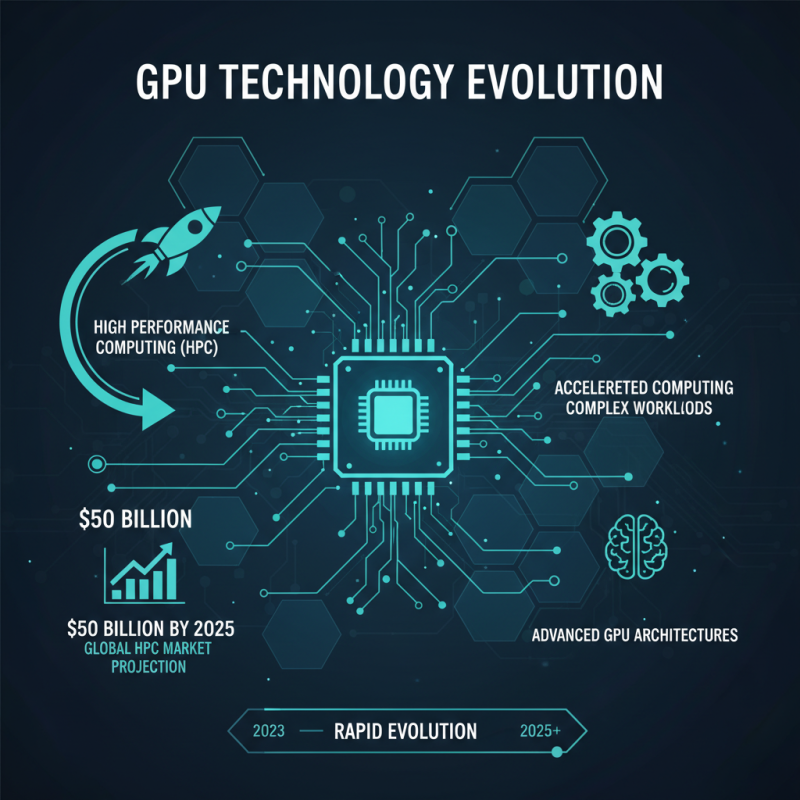
The landscape of GPU technology is evolving rapidly. High Performance Computing (HPC) is pushing boundaries. Research shows that the global HPC market will reach $50 billion by 2025. Companies are racing to harness GPU power for complex workloads. This surge indicates a shift towards accelerated computing models, relying heavily on advanced GPU architectures.
Emerging trends highlight the integration of Artificial Intelligence (AI) into GPU technology. According to industry reports, AI-driven GPUs improve efficiency and reduce processing times by up to 40%. Enhanced performance can be observed in clustered server environments, where GPUs work in tandem. However, challenges remain. Compatibility issues can arise with diverse architectures. Load balancing in distributed systems often requires manual adjustments.
Additionally, energy efficiency is a growing concern in GPU development. The aim is to reduce power consumption while increasing performance. Reports suggest that optimizing power usage in data centers could save up to $30 billion annually. As companies invest in greener technologies, the pressure mounts to innovate without compromising the environment. Future GPUs must navigate these demands while delivering superior performance for HPC applications.