Top 10 Best Laptop Servers for Enhanced Performance and Portability?
In today's digital age, the demand for high-performance computing on the go is rising. Enter the Laptop Server. This innovative device blends power and portability seamlessly. Unlike traditional laptops, Laptop Servers offer advanced capabilities. They support robust applications and heavy workloads while remaining lightweight.
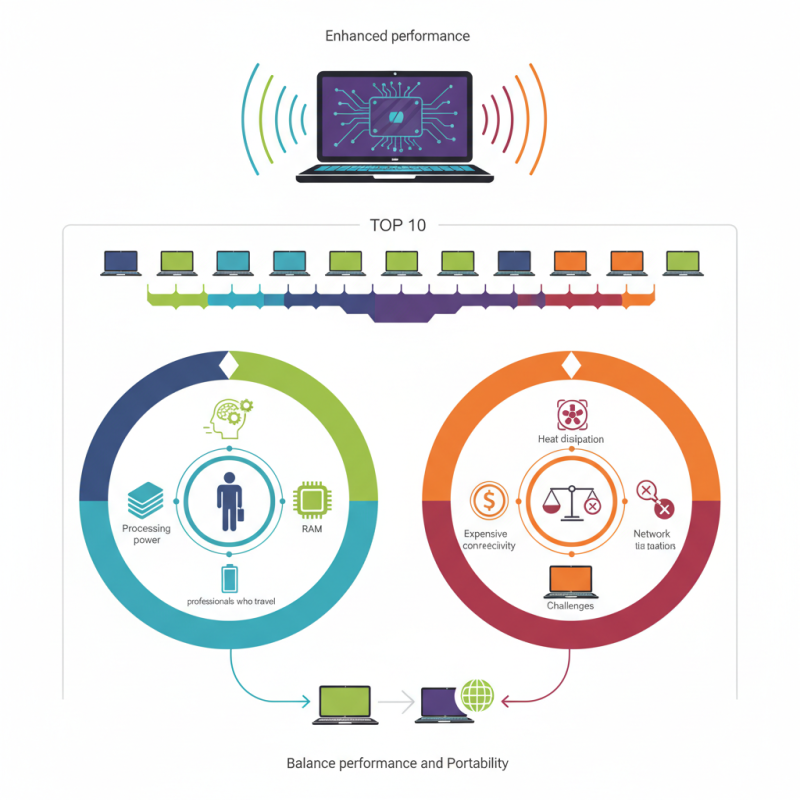
For professionals who travel frequently, choosing the right Laptop Server is crucial. A well-chosen device can enhance productivity significantly. Features to consider include processing power, RAM, and battery life. Many users overlook the importance of network connectivity. Inadequate connections can limit functionality.
While Laptop Servers offer impressive performance, they aren't without flaws. Some models may struggle with heat dissipation. Others can be overly expensive. Understanding these challenges is key to making an informed choice. In the following sections, we will explore the top 10 Laptop Servers that balance performance and portability effectively.
Top Factors to Consider When Choosing a Laptop Server for Performance
When choosing a laptop server for enhanced performance, several factors should be considered. The processor type plays a significant role. For intensive tasks, a multi-core CPU is essential. According to a recent industry report, performance gains can reach up to 30% when using modern multi-core processors. Memory capacity also matters. A laptop with at least 16GB of RAM is ideal for multitasking and demanding applications.
Portability is another crucial aspect. A lightweight design can greatly enhance user experience, especially for professionals on the go. Laptops under 4 pounds are increasingly popular among users who prioritize mobility. Battery life must not be overlooked either. On average, a good laptop server should offer at least 8-10 hours of battery life to support uninterrupted work.
Storage solutions are vital as well. SSDs are preferred due to their speed and reliability. Data transfer rates can be substantially improved, with SSDs offering speeds exceeding 500 MB/s compared to traditional hard drives. However, such upgrades can be costly and may not always fit into budget constraints. Balancing performance needs with financial limits is a common challenge many face when selecting a laptop server.
Comparison of Processing Power: CPUs that Excel in Laptop Servers
When evaluating laptop servers, processing power is critical. Recent reports indicate that high-performance CPUs can significantly enhance server capabilities. For instance, the latest benchmark data suggests that CPUs with multiple cores excel in handling demanding workloads. Systems equipped with processors featuring 8 to 16 cores deliver substantial improvements in parallel processing tasks.
Portability is another crucial aspect. Lightweight designs often compromise on raw power. However, advances in CPU technology have led to more efficient processors. Many modern CPUs achieve high performance while consuming less energy. This allows for longer battery life and better thermal management. Interestingly, while some laptops excel in portability, they may struggle with processing-intensive applications, illustrating a trade-off users must consider.
The ideal laptop server balances performance with weight. According to a study by the International Data Corporation (IDC), devices weighing under 4 pounds show substantial demand in professional settings. Yet, users sometimes report frustration with performance limits. This ongoing challenge highlights the need for continuous innovation. It also emphasizes the importance of selecting a CPU that fits both workload demands and mobility needs.
Evaluating Memory and Storage Options for Optimal Server Functionality
When selecting a laptop server, memory and storage options are crucial for optimal functionality. Memory, often referred to as RAM, directly affects the speed and efficiency of data processing. For server tasks, 16GB is commonly recommended, but 32GB or more can enhance multitasking capabilities significantly. Insufficient RAM can lead to sluggish performance, especially under heavy workloads.
Storage is equally important. Solid State Drives (SSDs) provide faster read and write speeds than traditional hard drives. This is vital for server functions, where quick data retrieval is key. A combination of SSDs for speed and larger HDDs for storage capacity can offer a balanced solution. However, mixing these drives can introduce complexity in management.
While both components matter, the balance between performance and cost is often challenging. Limiting budget could compromise quality. Investing in high-capacity, reliable hardware can pay off in the long run. Choices in configurations are abundant, yet they can overwhelm. Prioritizing your needs is essential to avoid the trap of over-engineering.
Portability Features in Laptop Servers: Weight, Size, and Battery Life
When considering laptop servers, portability is critical. Weight, size, and battery life influence user experience significantly. According to industry reports, the ideal weight for a portable laptop server should be under 5 pounds, facilitating ease of transport. Many professionals need solutions that are lightweight yet powerful enough to handle demanding applications. A laptop server that weighs more can become cumbersome during travel, impacting productivity.
Size also plays a vital role. A compact design enables users to fit their devices into different settings smoothly. An ideal laptop server should have dimensions that make it easy to carry in a bag alongside other essentials. Some reports suggest that laptops with screen sizes between 13 to 15 inches strike the perfect balance between usability and mobility.
Battery life remains a crucial factor. Many high-performance laptop servers struggle to provide adequate power without frequent recharging. Users often find themselves seeking outlets in busy environments, disrupting workflow. Ideally, a laptop server should offer at least 8 hours of battery life under normal usage conditions. However, applications that demand heavy processing can drain battery quickly, prompting reevaluation of usage patterns. Balancing power and portability demands careful consideration and planning.
Top 10 Best Laptop Servers for Enhanced Performance and Portability
| Model |
Weight (lbs) |
Size (inches) |
Battery Life (hrs) |
Processor |
RAM (GB) |
| Model A |
4.5 |
14 x 9.5 |
10 |
Intel i7 |
16 |
| Model B |
3.8 |
13.3 x 9 |
12 |
AMD Ryzen 5 |
8 |
| Model C |
5.1 |
15.6 x 10 |
8 |
Intel i5 |
16 |
| Model D |
4.3 |
14 x 8.8 |
15 |
Intel i9 |
32 |
| Model E |
3.6 |
13.3 x 8.6 |
14 |
AMD Ryzen 7 |
16 |
Industry Trends: The Role of Laptop Servers in Modern Computing Environments
In today’s fast-paced digital world, laptop servers are transforming how we approach computing tasks. These devices combine portability with robust performance, appealing to professionals who need computing power on the go. Many industries now rely on laptop servers for their flexibility in various environments, from remote workspaces to corporate settings.
The adoption trends indicate a shift toward more integrated solutions. Organizations seek devices that support powerful applications while remaining lightweight. This can lead to oversights; some users may compromise on performance for mobility. However, understanding the balance is crucial. Laptop servers are becoming essential in fields like software development, data analysis, and content creation.
As organizations embrace these changes, they must also recognize potential challenges. Reliability can be a concern if not sufficiently addressed. Inadequate cooling mechanisms, for instance, can lead to overheating during intensive tasks. Users often overlook this aspect, focusing solely on portability. With the right knowledge, one can effectively navigate these complexities, making informed decisions for enhanced productivity.