2026 Top Enterprise Switches for Enhanced Network Performance?
In today's fast-paced digital landscape, the importance of robust network infrastructure cannot be overstated. Enterprise switches are at the heart of this infrastructure. Their efficiency can significantly enhance overall network performance. As John Smith, a leading expert in networking technologies, aptly said, "The right enterprise switch can turn your network into a powerhouse."
The evolution of enterprise switches reflects the growing demands for speed and reliability. With the rise of remote work and cloud services, organizations require high-performance solutions. Choosing the right model among the 2026 top options is vital. Each switch has unique features tailored to specific business needs. However, navigating through them can feel overwhelming.
Moreover, not all enterprise switches come without challenges. Some may lack compatibility with existing systems. Others may require higher budget allocations than anticipated. It’s essential to weigh the pros and cons carefully. The right choice can lead to significant gains, while the wrong one may result in unexpected complications. Ultimately, understanding these nuances is crucial for leveraging enterprise switches effectively.

2026 Trends in Enterprise Switch Technology for Optimized Performance
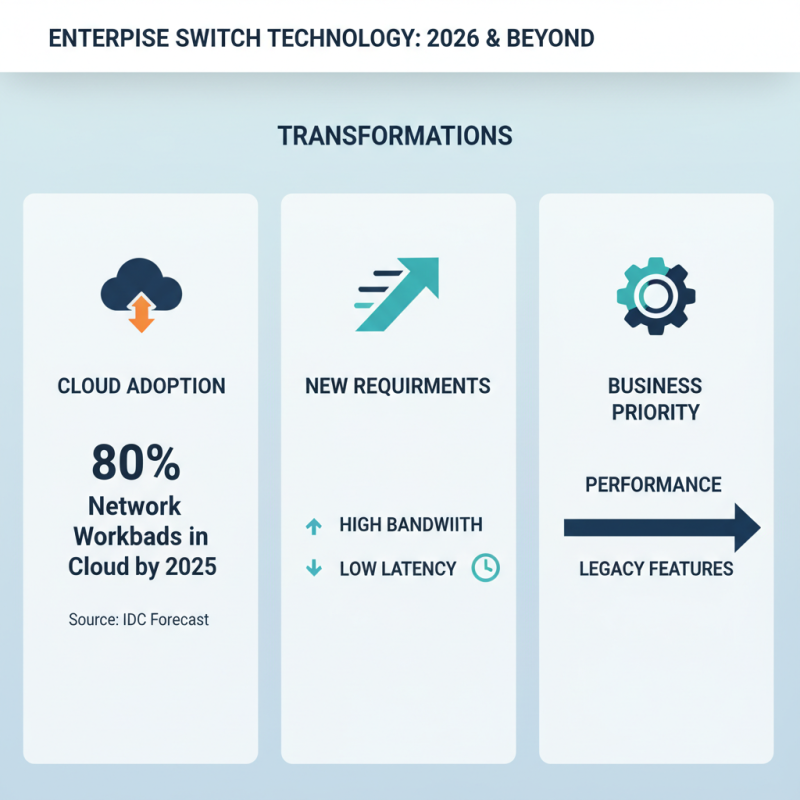
As we move toward 2026, enterprise switch technology is undergoing significant transformations. A report from the International Data Corporation forecasted that 80% of network workloads will leverage cloud environments by 2025. This shift requires switches capable of handling high bandwidth and low latency. Businesses now prioritize performance over legacy features.
Emerging trends include automation, where 60% of companies expect to implement AI-driven solutions in network management by 2026. Automation reduces manual errors and speeds up troubleshooting. It also enhances operational efficiency, with some organizations reporting a 30% decrease in downtime. However, relying heavily on automation might lead to knowledge gaps among staff.
Another trend is the push towards energy efficiency. The Global Network Switch Market Report indicated that energy-efficient switches could reduce operational costs by up to 25%. Yet, not all organizations prioritize sustainability in their switch purchases. This might lead to higher long-term costs. Recognizing these challenges is crucial for companies aiming to optimize performance while being aware of potential pitfalls.
Key Features of Top Enterprise Switches: Speed, Agility, and Scalability
In the fast-paced world of enterprise networking, speed is vital. Network switches must handle increasing data loads without delays. Speedy switches facilitate quick data transfers. This enhances overall system performance. Many businesses demand higher throughput. They look for switches with advanced capabilities. These capabilities support various applications simultaneously.
Agility is another key feature. A switch should adapt seamlessly to changing network demands. As businesses grow, their networking needs evolve. An agile switch can manage these shifts effectively. It allows for quick reconfiguration. This flexibility is essential for modern enterprises.
Scalability is also crucial. A network must grow with the organization. Switches should accommodate additional devices without compromising performance. This requires careful planning and execution. Companies often struggle with this aspect. They invest in high-performance switches but falter in scaling them efficiently. Finding the right balance of speed, agility, and scalability can be challenging. Yet, it is vital for enhanced network performance.
Comparative Analysis: Leading Brands in Enterprise Switch Performance
In 2026, enterprise switches play a crucial role in network performance for businesses. Selecting the right switch involves assessing several factors. Speed, reliability, and scalability are critical metrics. Businesses must consider their unique needs when choosing a solution. A switch with advanced features can enhance overall productivity. However, not every high-performance switch suits every environment.
The leading brands in enterprise switches showcase varied strengths. Some excel in high-speed data transfer, while others focus on energy efficiency. A switch’s interface can also impact ease of use. Intuitive designs make configuration and management simpler. Yet, some users struggle with complex setups. Balancing features and simplicity remains a challenge for IT teams.
While certain brands promise outstanding performance, real-world applications may differ. Some companies report latency issues that contradict product claims. Testing the equipment in your network environment is vital. It can reveal strengths and weaknesses that specs cannot show. The reality is that even with top-rated models, user experience can vary widely.
2026 Top Enterprise Switches for Enhanced Network Performance
Impact of 2026 Switch Solutions on Network Infrastructure Reliability
In 2026, the landscape of enterprise switches will transform significantly. Innovations in switch technology promise to enhance network infrastructure reliability. Improved performance will lead to fewer downtimes and smoother data flow. Companies will benefit from more robust connections across their networks.
**Tip:** Regularly assess your network needs. Technology changes quickly, and adapting is essential. Consider future growth when selecting solutions.
New switch solutions will often focus on automation and intelligence. This means networks can adapt to changing conditions automatically. However, relying solely on new technology can lead to complacency. It's crucial to maintain a hands-on approach in managing your infrastructure.
**Tip:** Perform routine maintenance checks. Address potential issues before they become problems. A proactive approach saves time and resources.
Network reliability impacts overall business performance. In 2026, companies must blend innovation with traditional management practices. Balancing both will be key to thriving in a competitive landscape.
2026 Top Enterprise Switches for Enhanced Network Performance
| Switch Model |
Port Count |
Max Throughput (Gbps) |
Power Over Ethernet (PoE) |
Management Type |
Price (USD) |
| Model A |
48 |
400 |
Yes |
Managed |
1,200 |
| Model B |
24 |
200 |
No |
Unmanaged |
600 |
| Model C |
48 |
320 |
Yes |
Managed |
1,000 |
| Model D |
48 |
480 |
Yes |
Managed |
1,500 |
| Model E |
48 |
600 |
Yes |
Fully Managed |
2,000 |
Cost-Benefit Analysis of Upgrading to 2026 Top Enterprise Switches
Upgrading to the latest switches can significantly impact network performance. Businesses often face the dilemma of whether the investment is worth it. Analyzing costs and benefits is crucial. The initial expenses can be daunting, yet the long-term advantages should not be overlooked.
For instance, modern switches can handle more data traffic. This leads to faster response times and better user experiences. However, the transition may not be seamless. Old equipment may require adjustments or replacement. This can add unexpected costs to the upgrade process.
Additionally, new features can enhance security. But they require training and adjustment periods for the staff. Some organizations may struggle to adapt to changes. It's essential to weigh these factors carefully before making a decision. Investing in the right technology can lead to improved efficiency and performance in the long run.