2026 How to Choose the Right Juniper Routers for Your Network?
Choosing the right Juniper Routers for your network is crucial. The market for networking equipment is projected to reach $50 billion by 2026, according to industry reports. Juniper Networks stands out due to its innovative technology and reliability. Companies seeking efficient and secure data transmission must consider their router selection carefully.
Reports indicate that more businesses are transitioning to cloud services. Consequently, network performance becomes a top priority. Many organizations rely on Juniper Routers for high-speed connectivity and scalability. However, not all routers meet every business need. It's vital to assess specific requirements and potential growth.
With advancements in technology, the wrong choice could hinder productivity. Network downtime costs businesses an average of $5,600 per minute. Thus, investing time into choosing the right Juniper Routers is essential. Decision-makers often overlook details like compatibility and technical support. Evaluating these factors ensures a more resilient network infrastructure.

Understanding the Basics of Juniper Routers and Their Types
When selecting Juniper routers, it’s essential to understand their fundamentals and classifications. Juniper routers come in various types, catering to different network needs. Whether it’s a small office or a large enterprise, knowing the right router type is crucial. Core, edge, and branch router categories serve distinct purposes within a network architecture.
Consider your specific use case when choosing a router. Are you supporting high traffic or securing sensitive data? Each type of router offers unique features. Core routers are built for high capacity, while edge routers connect external networks. Branch routers focus on local connectivity and efficiency.
**Tips:** Assess the scale of your network. If you underestimate your needs, you may face performance issues sooner than expected. Also, prioritize security features to safeguard your data. Don't overlook the integration capabilities with existing infrastructure. Ensure that the router can easily connect without significant overhauls. Evaluate the future growth of your network as well. Choosing a scalable option now can save time and resources later.
Identifying Your Network Needs and Requirements
When choosing the right routers for your network, identifying specific needs is crucial. Many businesses overlook how their network's scale affects performance. According to industry reports, 70% of network issues stem from improper capacity planning. Assess your bandwidth requirements. If your organization expects 1,000 concurrent users, a topology suited for only 500 will underperform.
Consider the types of applications you run. High-definition video conferencing requires more bandwidth and lower latency. If these needs are not met, the user experience suffers. A report by the International Data Corporation states that 30% of failed network projects are due to inadequate analysis of application needs.
Demand for security continues to grow. In 2025, it's projected that 60% of enterprises will prioritize security features in their routers. Choosing routers that can integrate advanced security protocols can mitigate risks. Evaluate not just current needs but future demands as well. An improperly chosen router may lead to wasted resources and operational inefficiencies. Think critically about your network's evolving requirements.
Evaluating Performance Specifications of Juniper Routers
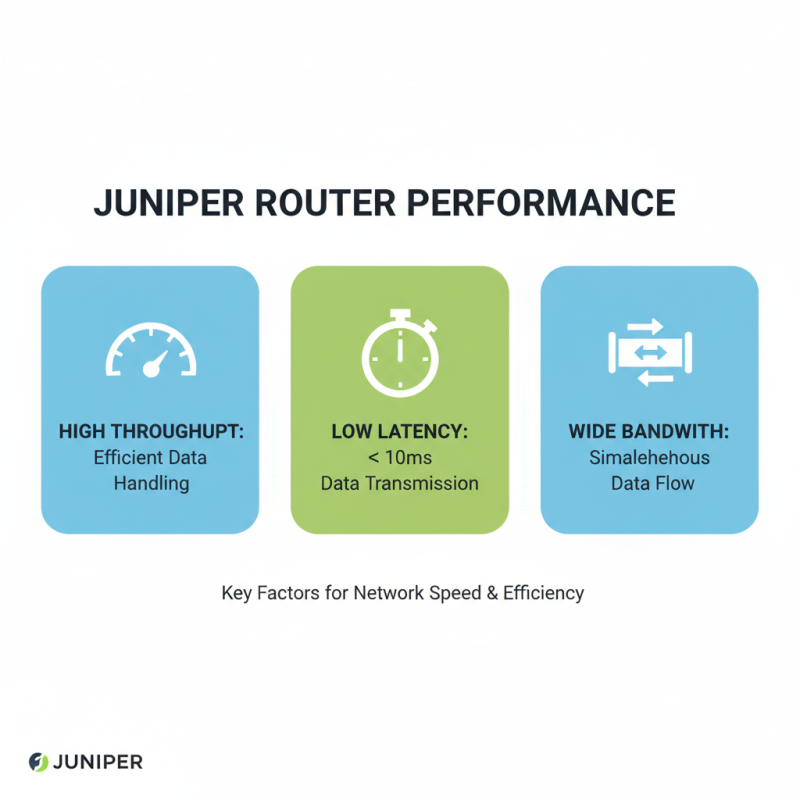
When selecting the right routers for your network, performance specifications play a critical role. Look for routers that support high throughput. A router's ability to handle data efficiently can drastically impact your network speed. Consider both latency and bandwidth as key factors. Latency affects how quickly data is transmitted. Most users prefer a latency of less than 10 milliseconds. Bandwidth determines how much data can flow simultaneously, influencing overall performance.
Evaluate the processor capacity and memory of the routers. Higher specs typically yield better performance, especially under heavy loads. Additionally, assess the available network interfaces. Multiple ports can enhance flexibility and support for various technologies. It’s wise to ensure compatibility with existing systems. Not all specifications will suit every environment, making it crucial to match router capabilities with your specific requirements.
Remember to reflect on the long-term needs. The network landscape evolves quickly. Future-proofing your choice could save you headaches later. Opting for routers with upgrade potential is wise. However, don’t overlook the cost versus performance balance. Sometimes, it’s tempting to select the highest specs. Yet, the best router for you may not be the most powerful one. Be cautious and deliberate in your evaluation process.
Comparing Cost-Effectiveness and Budget Considerations
When selecting Juniper routers, cost-effectiveness is crucial. It’s not just about the initial price. Consider long-term operational costs. Energy consumption can vary. A router that saves on energy costs might be more economical in the long run. Assess the total cost of ownership. This includes maintenance, support, and upgrades.
Budget constraints often force choices. A more expensive router may offer better performance and reliability. However, is that worth the investment? Analyze your network's needs. If your network scales quickly, opt for a router that supports growth. It might be more costly upfront but could save money with fewer replacements.
Don’t overlook hidden costs. Internal training for staff on new equipment can add up. Additionally, think about the potential downtime during installation. Weigh your options carefully. A less expensive router could lead to issues down the line. Balancing performance and budget is challenging but necessary for a resilient network.
Cost-Effectiveness of Different Router Options for Your Network
This bar chart illustrates the cost of four different router models, helping you evaluate their cost-effectiveness for your network needs.
Assessing Future Scalability and Network Growth Potential
Choosing the right Juniper routers for your network requires careful consideration of future scalability and growth potential. According to recent industry reports, businesses are expected to generate 175 zettabytes of data by 2025. This explosion in data necessitates robust routing solutions that can adapt as your network grows.
Evaluate your current network demands and anticipate future needs. If your organization plans to scale, consider routers that support modular upgrades. Research suggests that 90% of IT leaders prioritize scalability when selecting network solutions. A scalable router minimizes disruptions and helps ease transitions during growth phases.
Tips: Focus on routers with advanced features like AI-driven analytics. These capabilities empower your network to adapt intelligently. Always ensure compatibility with existing infrastructure, as this helps avoid integration issues later. A well-thought-out investment can lead to fewer headaches down the road.
Remember, the right choice today affects your network's performance tomorrow. Assessing growth potential can be challenging, as many underestimate their needs. Consider a phased approach, where you reassess your requirements annually. This can provide valuable insights into your network’s evolution and guide your future decisions.
2026 How to Choose the Right Juniper Routers for Your Network? - Assessing Future Scalability and Network Growth Potential
| Router Model |
Max Throughput (Gbps) |
Max Number of Ports |
Scalability Features |
Recommended Use Case |
| Router A |
10 |
24 |
Modular Expansion, Virtual Routing |
Medium Enterprises |
| Router B |
20 |
48 |
High-Density Ports, Redundant Power |
Data Centers |
| Router C |
40 |
12 |
Load Balancing, Traffic Management |
Large Enterprises |
| Router D |
100 |
10 |
Advanced Security Features, Network Analytics |
Service Providers |
| Router E |
5 |
30 |
Compact Design, Energy Efficient |
Small Businesses |